'I will be the Hummingbird'
The Climate Consciousness Summit has been alive with the spirit of the Hummingbird. Taking inspiration from a story of resilience and courage told by beloved Kenyan mother Wangari Maathai of the Green Belt Movement, young Kenyan activists are working to restore health to their communities.
By Megan Lindow
The spirit of beloved Kenyan environmental defender Wangari Maathai, founder of the Green Belt Movement and Nobel Peace Prize laureate, has been alive this week at the Climate Consciousness Summit of the Pocket Project.
Kenyan Time 100 Impact honoree, youth environmental and climate leader Elizabeth Wathuti was the first to invoke her name. Speaking with host Sonita Mbah, Wathuti told the story of the hummingbird, which is forever connected with Maathai's legacy:
In a terrible forest fire, the story goes, all the animals flee in terror – except the hummingbird, who is determined to do what she can. Back and forth the hummingbird flies between the river and the burning forest, collecting drops of water in her beak to douse the flames.
Maathai's message was clear: as environmental destruction accelerates around the world, all of us can step up and be the hummingbird. In her words: "I may feel insignificant, but I certainly don't want to be like the animals watching while the planet goes down the drain. I will be a hummingbird. I will do the best that I can."
As founder of the Green Generation Initiative and a commissioner on the Global Commission on the Economics of Water, Wathuti has embodied this same spirit of grounded activism. In Kenya, she has worked to nurture an environmentally conscious citizenry and mobilise youth, women and marginalised communities in tree planting, education and resilience building. She has championed the need to support their efforts on the ground, and empower their voices on the global stage.
In a LinkedIn post from COP30 in Belém, Brazil yesterday, Wathuti wrote: "COP30, Belem 🇧🇷 is being called the Implementation COP which is great. But implementation doesn’t happen in meeting rooms, it happens in communities, on the ground by the people doing the real work and driving climate solutions starting from the local level, building up to the national, region and global levels."
In her memoir Unbowed, Wangari Maathai shared a deeply moving account of the beauty of her childhood in rural Kenya, and the devastating ecological and cultural destruction she witnessed during her lifetime. In her powerful Nobel speech, she recognised how intimately the health and wellbeing of people and planet are intertwined:
In 1977, when we started the Green Belt Movement, I was partly responding to needs identified by rural women, namely lack of firewood, clean drinking water, balanced diets, shelter and income.
Throughout Africa, women are the primary caretakers, holding significant responsibility for tilling the land and feeding their families. As a result, they are often the first to become aware of environmental damage as resources become scarce and incapable of sustaining their families.
The women we worked with recounted that unlike in the past, they were unable to meet their basic needs. This was due to the degradation of their immediate environment as well as the introduction of commercial farming, which replaced the growing of household food crops. But international trade controlled the price of the exports from these small-scale farmers and a reasonable and just income could not be guaranteed. I came to understand that when the environment is destroyed, plundered or mismanaged, we undermine our quality of life and that of future generations.
The spirit of Mathaai flew back to the Climate Consciousness Summit a few days after Wathuti first invoked her name. During a live session with young Kenyan climate activists, climate justice advocate and lawyer Natalie Bullet told the hummingbird story once more.
She and her colleagues Jewel Ndung'u, Stacy Roberts and Cynthia Achieng – all fellows of the Resilience Project – spoke of how climate change is unravelling the resilience of their communities, as the environmental destruction Maathai observed has deepened.
The young women spoke of the intense weather patterns – droughts and flash flooding – causing displacement of communities and disruptions to livelihoods and infrastructure. They shared how mental health and community support structures are breaking down. Their stories highlighted the vulnerability of rural farmers, and the heightening malnutrition, food and water insecurity people are facing.
Yet with deeply moving empathy, humor, grace and fortitude, they also described their support of one another and their creative and nimble responses to these challenges. They spoke their resolve to be the hummingbird, fighting the flames drop by drop.
Also attending the call were fellow Kenyans Wegesa Jane Fraser and Millicent Olal, who have been StoryWeaving with StoryMoss, in the Design School for Regenerating Earth and through the confluencing of the recent r3.0 conference respectively.
From Kitale, western Kenya, Wegesa Jane works with women in arid and semi-arid areas across East Africa to restore landscapes and develop small-scale regenerative farming practices, weaving agroecology and permaculture techniques of composting, water harvesting and pest management with indigenous knowledge of seeds and crops, weather patterns and planting cycles. Through community training programmes supported by Regenerosity, her work empowers women in growing abundant, healthy food for their families in a harsh environment.
Her adult daughter Melody Edwards Wegesa, a teacher, incorporates permaculture, arts and creativity into her work with young children. "Teaching kids permaculture is something we should take seriously. They're the ones who need to really grasp what we need to change the world," she says.
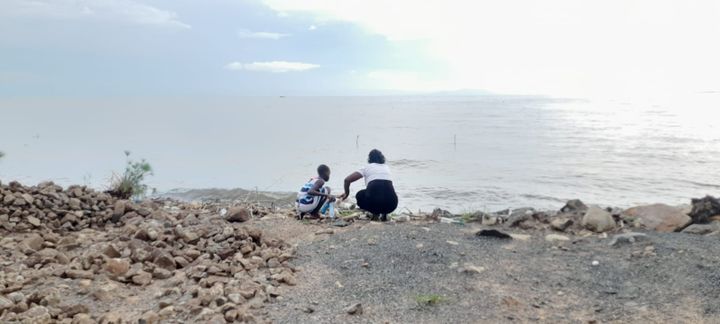
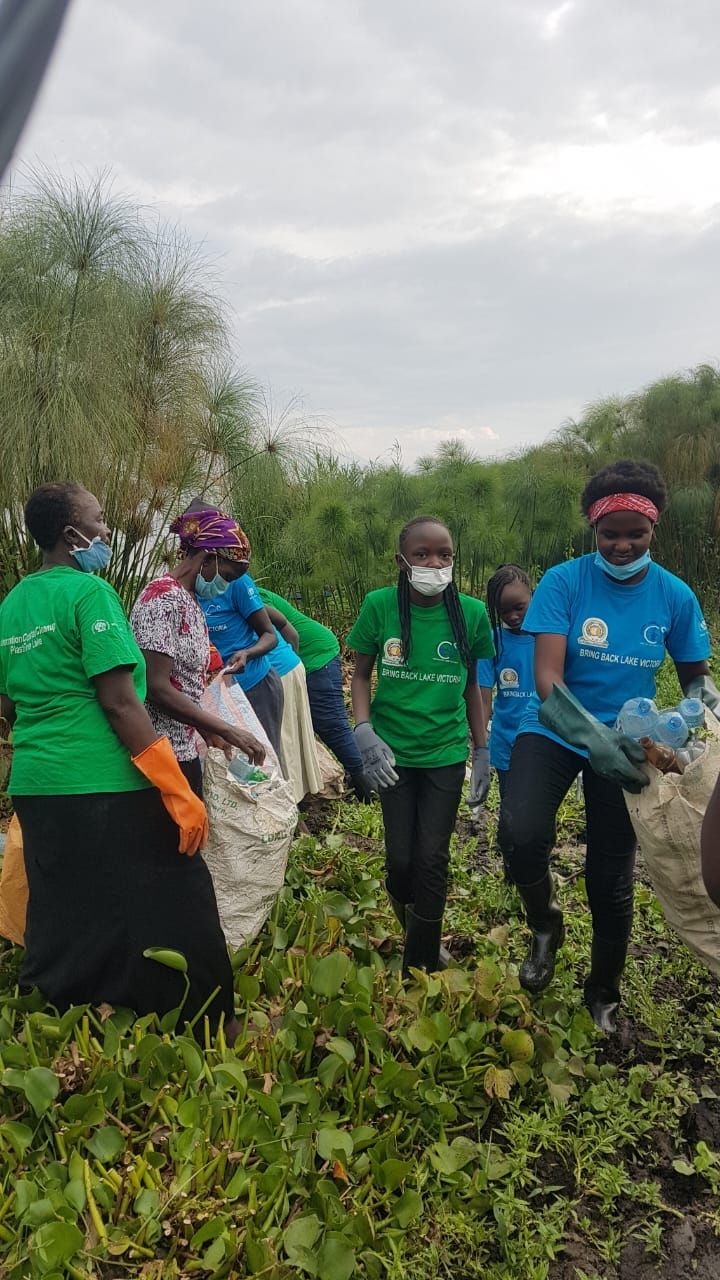
A small hummingbird flight away in Kisumu, Millicent and her teenage children Michelle (Mickey) and Jeremy are mobilising a huge effort to clean up plastic pollution and restore ecological health to Lake Victoria.
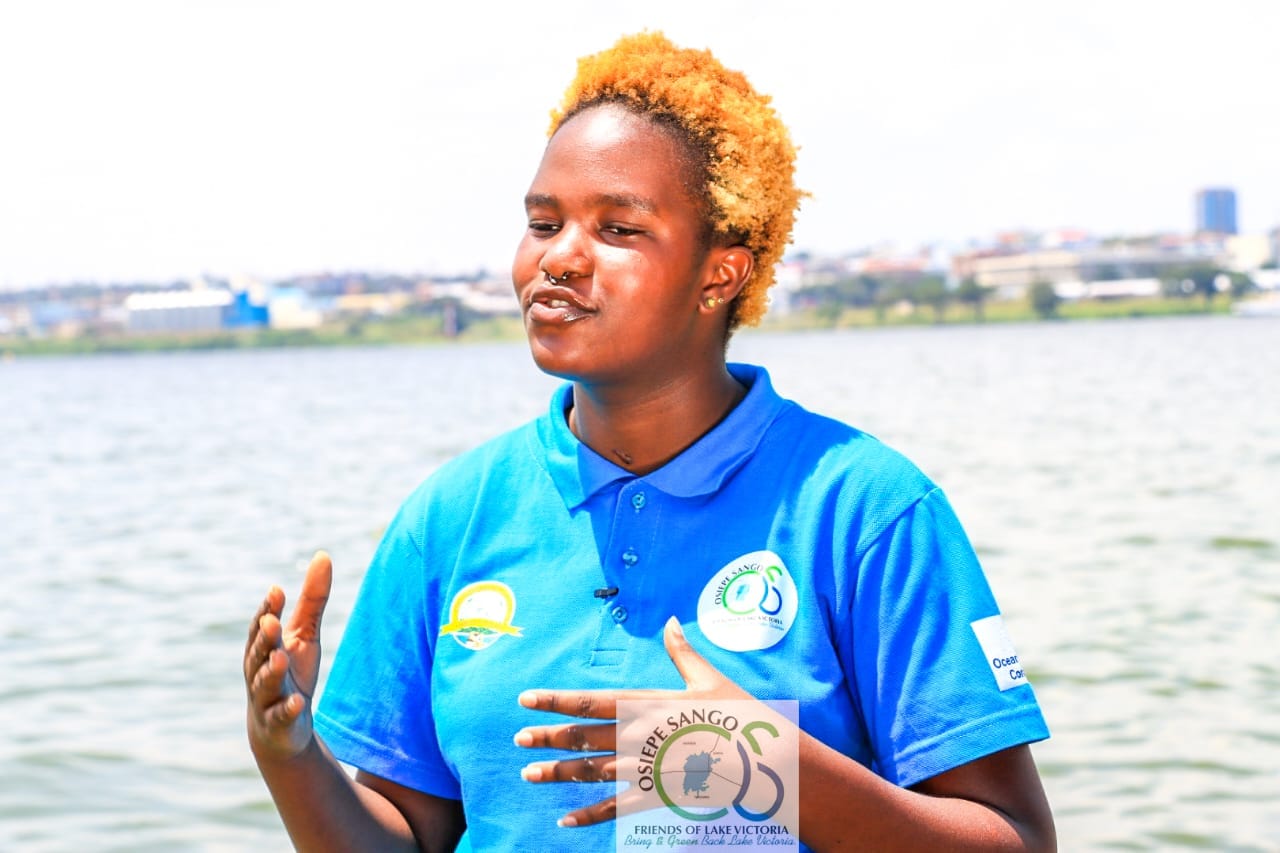
"When I was young, Mom told me stories about the lake, about how much fish we used to eat, how my older sister and I were able to play on the beach," Mickey says. "As I've grown up, the lake has basically completely degraded. The beaches were carried away by sand harvesters. When I was growing up there was no plastic in the lake, it shows you how much change has happened in 20 years."
Visiting the lake years later, she was shocked to find its surface completely covered in plastic waste. Soon after, when schools closed during COVID, Mickey and Jeremy, ages 15 and 13 at the time, convinced their mother to let them drop the formal curriculum and pursue their own interests. Soon they were spending their days photographing and picking up plastic waste on the shores of the lake. Finding the blueprints online to develop a plastic recycling plant in the community, they started knocking on the doors of government agencies and community organisations to mobilise clean-up efforts, founding the organisation Osiepe Sango. We will post an in-depth podcast of their journey soon!
We are so inspired by the spirit of the hummingbird emanating through all the dedicated efforts of these beautiful Kenyan Earth Regenerators, and feel honoured to continue the StoryWeaving and StoryHealing together!
May we all be moved by the spirit of the hummingbird!