The Honorable Harvest by Megan Lindow
"Our hearts hurt when we see biodiversity going away, and we know there are better ways to manage the world. That destruction of the natural world affects us deeply. It adds to our trauma because we’ve lived so close to the Earth for so many generations." - J Dallas Gudgell

By Megan Lindow
J Dallas Gudgell, a tribal member of the Fort Peck Assiniboine and Sioux Tribes of Montana, USA, has been on a mission to protect and restore the buffalo herds of Yellowstone National Park and on tribal lands.
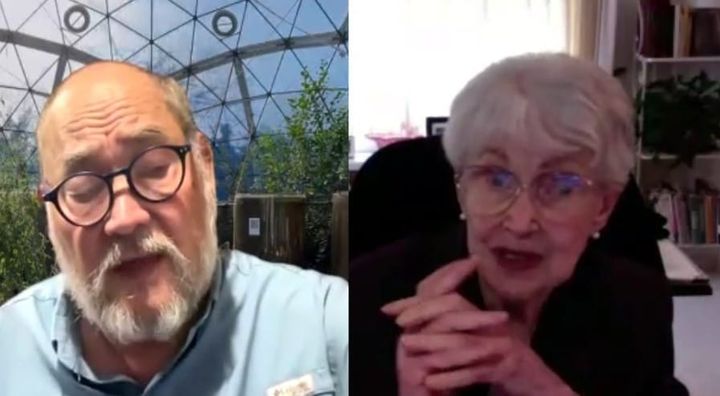
In a deeply moving conversation with Pocket Project host Sonita Mbah for the Climate Consciousness Summit, trial elder Gudgell spoke of how a reciprocal relationship between humans and buffalo once underpinned traditional indigenous lifeways on the North American grass plains.
People co-evolved with the buffalo over millennia in a sacred agreement to take care of one another. The four-legged buffalo would give their bodies to feed and nourish their two-legged kin. In return, the people would respect the buffalo with an honorable harvest, taking only what they needed for sustenance.
When the colonial settlers occupied the land, they targeted the buffalo, driving them nearly to extinction in the genocide waged against their human kin. In Gudgell's words, a four-legged genocide ran parallel to the two-legged genocide. "The intent was to eradicate both, and both are still here," he said. "By restoring the buffalo, we the plains tribes, the Lakota peoples, will be restored."
The conversation between Gudgell, who is vice-president of the Buffalo Field Campaign in Yellowstone, and Mbah, who spoke from her own indigenous African roots in Cameroon, highlighted a kinship understanding of life. "We are in the natural world, and the natural world is in us. It's a oneness," said Mbah.
The buffalo gives its body and becomes part of human bodies. In a creation story held in common by many indigenous American tribes, said Gudgell, all living beings were born from a great romance between Father Sky and Mother Earth. Some of their children had two legs and four legs; others had roots, wings and fins.
Listening to the conversation, I was reminded of how my own work in South Africa with narratives of indigenous edible plants, has helped me begin to unlearn an extractive relationship with food. I resonate deeply with the principle of an honorable harvest, even if I don't often find the wherewithal to follow this in daily practice.
The Japanese farmer philosopher Masanobu Fukuoka writes in his book One Straw Revolution that the highest purpose of the human being is to exist simply with nature, working to her rhythms and receiving her gifts of nourishment with reverence, restraint and delight.
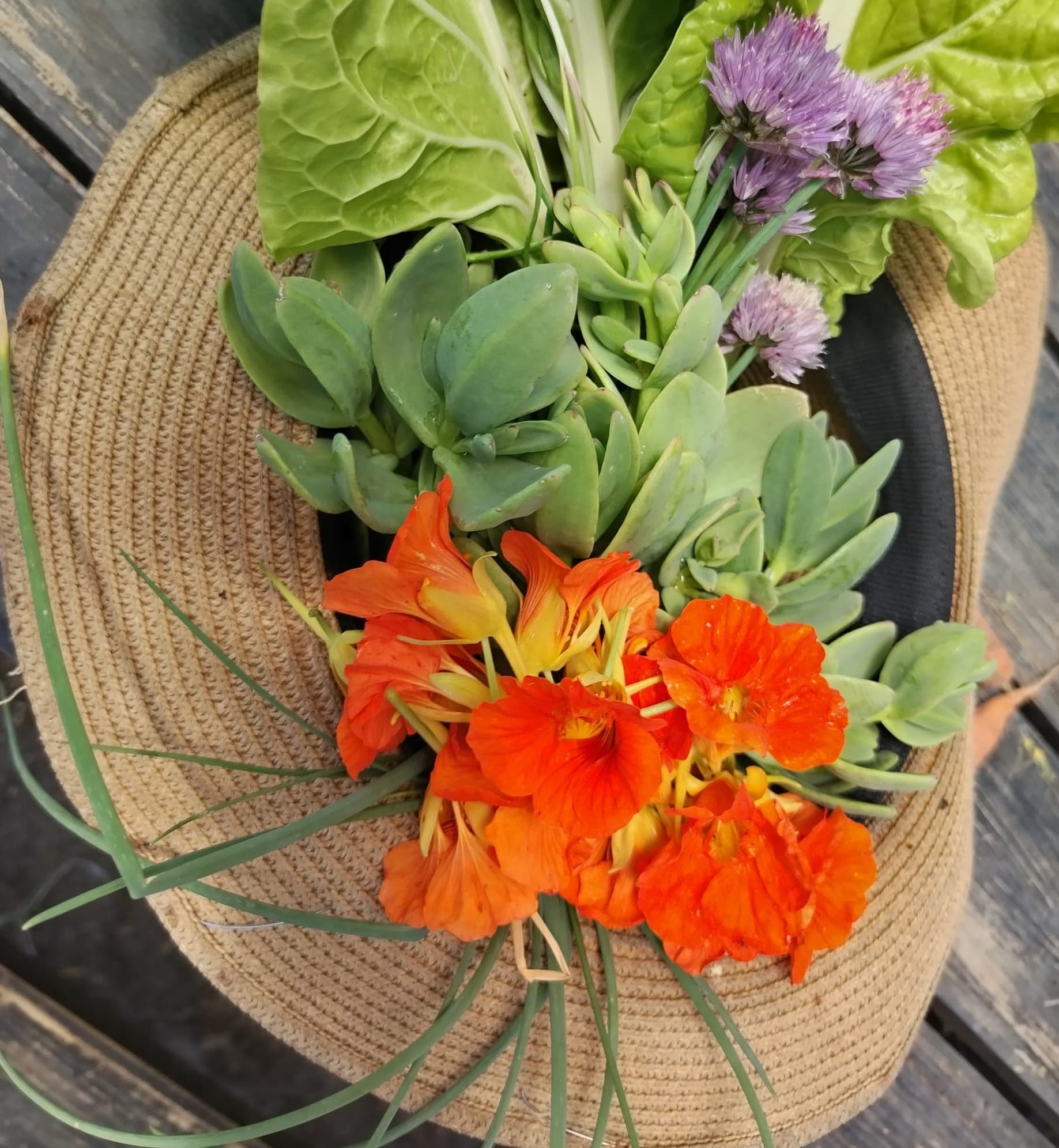
I've learned that sourcing food in the landscape creates an abundance state of mind, a wellspring of gratitude and connection. Selecting leaves of the spekboom, sea pumpkin, sunrose, pelargoniums and all the other crunchy and sour, or bitter tasting and aromatic plants I have been getting to know, I feel myself connecting with the plant, asking permission, trying to sense which particular leaves offer themselves to me. Thinking of the season and the plant's growth cycle. Thinking of all the other beings who may also eat from this plant or that patch.
Eating tart, juicy, crunchy leaves, gathered mindfully and respectfully with my own hands from the landscape, I am filled with a sense of joy, gratitude, wonder and abundance. I have the feeling of the life force of the plants absorbing into my body and nourishing me.
Like Gudgell's work, the work of the Local Wild Food Hub, who partner on projects with the Sustainability Institute near Stellenbosch, South Africa that I'm involved with, aims to support the healing and restoration of people and land. Like the tribes and the buffalo of North America, the people and plants of this stunningly diverse Cape Floristic Region of South Africa have been dispossessed over centuries of violent colonization. People were enslaved and natural food landscapes subsumed by privately owned farms of grapes, wheat and other imported monocultures.
In a modern world driven by extractive and transactional values, our relationships to food and life must be healed and restored.
The work of Dr. Lyla June Johnston, another speaker at the Summit, documents how indigenous peoples of Turtle Island once served as "Architects of Abundance," managing landscapes holistically to enhance entire ecosystems. Cultivating coastal clam gardens in the Pacific Northwest, managing grasslands with gentle fire regimes to create habitat for the buffalo, tending immense chestnut food forests on the East Coast of what is now the USA, humans have served as keystone species in landscapes and coastal areas over thousands of years.
Gudgell said: "Our hearts hurt when we see biodiversity going away, and we know there are better ways to manage the world. That destruction of the natural world affects us deeply. It adds to our trauma because we’ve lived so close to the Earth for so many generations."
If indigenous people are allowed to bring back the holistic ways of managing buffalo herds on public lands according to their traditional lifeways, he said, ecostystems will be restored and people will thrive too.