Healing our humanity with love
Peace is not merely the absence of conflict. It is the active journey of meeting our wounds with courage and love.

By Megan Lindow
We express our humanity through love. We express our love in infinite ways. Love can be fierce, tender, courageous, compassionate, steadfast.
Love is active and alive. It is lived through the warmth of laughter; through a much-needed hug in the passageway; through giving shelter and protection from harm; through the shared rhythms of song and dance; through the preparation of food; through the healing rituals of storytelling, and the honoring of sacred connections to land and the living web.
Through all these acts of love, large and small, invisible and grand, the fabric of peace is woven and sustained by many hands and hearts coming together. Women, as caregivers and givers of life who are often deeply involved in their communities, play an essential and often unsung role in weaving the relational fabric of peace.
With the opening of the Pocket Project's online World Women Summit 2026, "Women Rising for Peace," held March 25-29, different keynote speakers explored the intimate and intricate connections between peace and love. Both are robust expressions of life, not the soft, fuzzy concepts they are so often made out to be.
As Thomas Hübl has said, peace is not merely the absence of conflict. It is the active journey of meeting our wounds with courage and love. It is the willingness to dance with our pain, to grow through it and be transformed.
"Peace is the path of confronting the pain and separation that lives within us and between us," said Pocket Project CEO Kosha Joubert.
"How can we hack humanity and love into everything we do?" asked global climate and systems transformation expert Sandrine Dixson-Declève.
Dr. Rola Hallam, a physician, humanitarian and social entrepreneur from Syria, observed that the Arabic words of greeting, As-salamu alaykum wa rahmatullahi wa barakatuh, carry the spirit of peace on all levels.
"We are all meant to be a walking peace, a walking mercy, a walking blessing for each other. We all get to be the medicine for each other. We are all a divine instrument, as we are here to share our gifts and talents with each other," she said.
Yet many of us carry individual, collective and intergenerational traumas that rupture our sense of our own humanity. The traumas of violence and war, of domination and exploitation. The deep wounds and painful erasures of colonization.
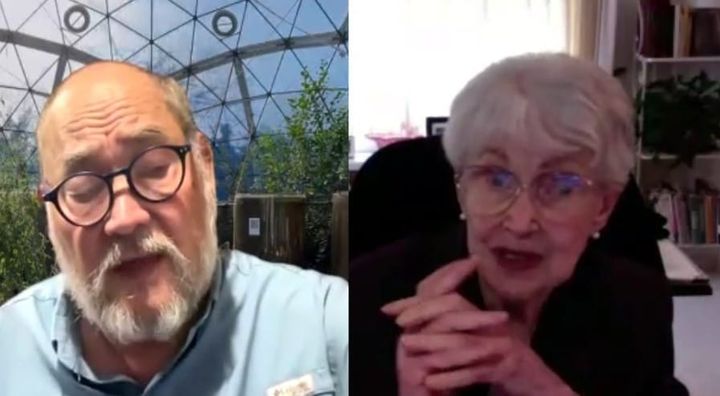
As Summit host Sonita Mbah explored in a powerful conversation with Lakota and Dakota therapist Serene Thin Elk, the intentional violence of colonial education systems and residential schools wiped out the languages, kinship ties and cultural practices of indigenous peoples around the world. Deep intergenerational bonds of reverence for Mother Earth were broken. Experiencing these and so many other wounds of warfare, oppression, addiction, food insecurity, gender and family violence, many have stumbled on the path of peace.
How do we find our way back to peace?
Serene Thin Elk spoke of the strong traditions of storytelling and ceremony in her culture, and the strong connections between people and land, that have given people strength to face the hardest intergenerational legacies of colonization. As Sonita remarked, after generations of genocide and cultural erasure, the brilliance of indigenous wisdom continues to shine through.
Whatever our background, when we are seen and held with love as we process and integrate our traumas, we can step back into our humanity.
In the coming days, the complex facets of building and sustaining peace will continue to be explored in new conversations released daily. You can still register for the summit here.