Exploring the biology of peace with Polyvagal Theory expert Deb Dana
Our internal biology can serve as a vital pathway to peace. Polyvagal Theory expert Deb Dana has helped people around the world to befriend their own nervous systems and offer connections of safety and support to those around them.

By Megan Lindow
Our capacity for connection and safety with one another lives in the nervous system. When we come together, even if we are not consciously aware of it, our nervous systems are tuning in to each other. They are sensing and responding to each other's signals of safety and danger.
As Thomas Hübl says, I feel you feeling me. You feel me feeling you.
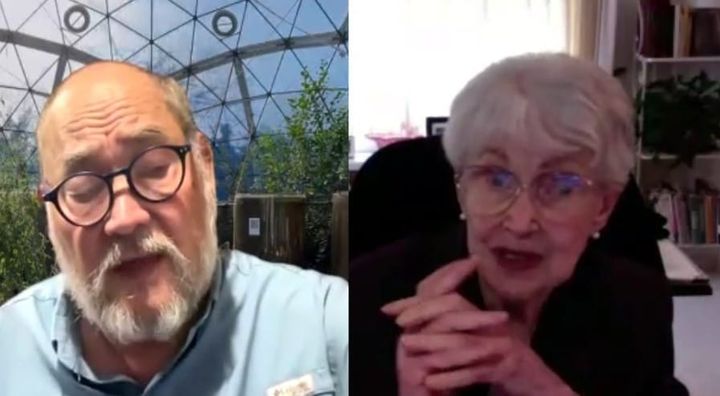
A conversation between Polyvagal Theory expert Deb Dana and Pocket Project CEO Kosha Joubert in the World Women Summit 2026, explored how the biology of our nervous systems has profound and largely unrecognized implications for peace.
Befriending our nervous system
Befriending our own nervous system, we can anchor into regulation, stand tall within ourselves, and speak our truth – "Regulation does not mean calm necessarily. It can also mean strength. It can mean forthrightness. It can mean standing up for what you believe in, from a place of intention and a place of regulation," Deb said.

In conflicts between nations, in communities or among individuals, there are always stories. Stories about who did what, who is right, who is wrong. Yet we often don't realize how our stories are shaped in the biology of our nervous systems.
What did your nervous system learn about keeping you safe in the world as you were growing up?
With Polyvagal Theory, developed by Dr. Stephen Porges, Deb has helped people around the world understand how the patterns ingrained in their nervous systems shape their interactions in life. Working with survivors of complex trauma, she discovered that with the embodied support of Polyvagal Theory, clients who had previously struggled to integrate their traumas were experiencing profound healing that sometimes felt "magical."
This is very practical magic. Each one of us has the ability to befriend our nervous system, to discover and attune to the feelings of regulation and dysregulation that are constantly flowing through us, Deb said. When we do this, our awareness of our nervous system grows, and we can take greater responsibility for how we show up in the world. When I am in a dysregulated state, I dysregulate other nervous systems around me. When I am regulated, I send out a message to all the other nervous systems around me that I am a place of safety, connection and support.
What is Polyvagal Theory?
Just beneath our conscious awareness, our nervous system is constantly scanning our environment for signs of safety and danger. It does this to keep us alive. Over our lifetime, our nervous system has gathered information and developed strategies to help us survive. Some nervous systems have learned to become quiet and invisible. Others have learned to become big and loud. Each nervous system has a different sense of safety and danger, based on what it has experienced. For you, the smell of smoke may evoke memories of warm conversations around the campfire. For me, it may evoke a sense of grave danger.
Polyvagal Theory illustrates how this all works biologically. From the brain stem at the base of the skull, the "wandering" vagus nerve travels the body along two different pathways. The ventral vagal pathway responds to cues of safety and social connection; when this pathway is activated, a sense of wellbeing emerges. The dorsal vagal pathway picks up cues of danger, taking us "out of connection, out of awareness, and into a protective state of collapse." (Read Deb's layperson's guide to Polyvagal Theory here (pdf).
Most of us are not aware of how our nervous system's constant calibrations shape our ways of being in the world. We might often be moving in and out of regulation from one moment to the next without even realizing it.
The nervous system and war
In conflict and war, the challenges of staying regulated are greater. As Kosha observed from the Pocket Project work with Palestinians and Israelis, even being in conversation with one another presents an existential danger. The words used by one side are deeply triggering for the other – "The way the world looks, the way language is used, the way that separation is consciously created by the systems – all play into a situation where nervous systems are trying to stay regulated."
We can really only undertake the delicate, courageous, relational work of peacebuilding from a nervous system that is regulated enough – even while a conflict situation, by its very nature, will much more often engender co-dysregulation.
"I have to be exquisitely in tune with what's happening in my own system," Deb observed. This means leaning into embodied intelligence, and asking: "What does my nervous system need in this moment?" Maybe it's a cup of tea, feeling the sunlight on your face, a moment with a tree, or a supportive conversation with a friend. Each glimmer of beauty, joy or respite that we can give ourselves nourishes the nervous system, allowing us to gather strength and resilience to turn back towards the traumas "out there" and work with them.
"This wisdom lies inside each of our nervous systems, and when we can tune in and listen, the nervous system will guide you, because I believe it inherently longs to help you come into regulation," Deb said.
"It doesn't mean that I'm running from what's out there. It means that I am taking the time to fill myself with the energy I need so that I can stretch into something new. We stretch and then come back and nourish, so we can go out again and try to shape the world in a new way."
Every time we notice a glimmer, savor it and let it flood our system, even for just a few seconds, it helps to grow and reshape the capacities of the nervous system too. Befriending our nervous system and being guided by it, we grow our capacities to be a seed of peace in the world.