A Field Kitchen for Slow Disasters - healing food landscapes in the Cape Floristic Region of South Africa
A "Food for Landscapes: Recipes for Slow Disaster" activation builds collective engagement through art, food and ecology, bringing a deep time lens to situations of social and ecological disaster to discover ways of restoring relationships between people and land.
By Megan Lindow
The word 'disaster' often evokes images of sudden upheaval. In the popular imagination, a disaster is the toxic spill or earthquake or violent attack or raging fire that suddenly erupts out of nowhere and lays waste to the neighborhood.
Yet as artist Andrew Merritt from the United Kingdom explores in a body of work called Field Kitchen, disasters are often both sudden and slow; both tumultuous and silent. Through the long arc of history disasters have always percolated in the soil of civilization. Situations of warfare and collapse stimulate improvisations of response – the field kitchen and field hospital, as it were – which then go on to shape new patterns of living from which new disasters arise. Disasters are woven through the very ground of human existence in economic and agricultural paradigms that sow harm and subjugate life.
You can see this in a plate of food. Just think of how your favorite "comfort foods" carry the memories and associations of your identity, culture and sense of belonging. And at the same time try to imagine all the complex histories, relationships, innovations and transactions, from the invention of the farm enclosure to the architecture of the supermarket till, that underpin the production and delivery of the food on your plate. How does this particular combining of relationships and contexts (with a nod to Nora Bateson, creator of Warm Data Labs) also produce climate change, biodiversity loss and social inequality? As Andrew observes, "Both the civilizations we live in and the food systems that feed us owe a debt to disaster."
Perceiving Slow Disaster
"Slow Disaster" is the term he coined to describe the destruction of landscapes and their biocultural integrity, through all the activities that have built, sustained, destroyed and remade civilizations over time.
The idea of "shifting baselines" describes a kind of generational amnesia that often makes slow disaster hard to perceive. When social and ecological erosion unfolds at a deep, slow tempo spanning multiple generations, it often doesn't map to the scale of human experience, so we don't recognize the disaster before our eyes. An older generation might remember the fish that once swam in the river, but to the next generation a river without fish appears normal because they have never known otherwise.
In late October, Andrew came to the Sustainability Institute in the Cape Winelands of South Africa to collaborate with local wild food expert Loubie Rusch in a Slow Disasters / Field Kitchen activation titled "Food for Landscapes: Recipes for Slow Disaster." He is co-founder of Something & Son, a socially and environmentally engaged artistic collaborative, and has exhibited work at the Tate Modern, the V&A Museum, the Gwangju Biennale and elsewhere. The Slow Disasters project will be activated in the United Kingdom, South Africa and Mexico over the next few years.
Loubie is the founder and coordinator of the Local WILD Food Hub through which she partners on a number of projects with the Sustainability Institute, a local / international 'Imaginarium' where children, youth and adults innovate and explore creative, regenerative, life-inspired learning. The Local WILD Food Hub supports the healing of people and land through re-introducing the incredibly diverse yet long forgotten and dormant foods of the Cape Floristic Region to people's palates and plates, food traditions and food landscapes.
Around 30 participants of different ages and backgrounds gathered in a workshop at the Sustainability Institute for the first "Slow Disasters" exploration. I joined the activation as part of my work with Loubie to help surface and explore the local narratives of wild food at the Sustainability Institute. Through Andrew's methodology of the Field Hospital (as a response to disaster), we were invited to engage with the trajectories of slow disaster in the Lynedoch Valley where the Sustainability Institute is situated. How did disaster shape the local food system of today, and what possibilities may exist for healing and repair?
We perused maps and tasted foods representing the lifeways of the Lynedoch Valley through four different eras – the deep time pre-colonial past, colonial times, the present day and the near future. In the process, we engaged with several questions:
- What food does the landscape need?
- Is there an appetite for interventions that regenerate lost relationships?
- What would a Field Kitchen or a Field Hospital look like in a context of Slow Disaster?
A Walk Through Time
Introducing the project, Andrew shared that he was initially inspired by an example of England's colonization of its own land and people, as the Fens peat marshlands of eastern England were transformed over centuries from their natural wetland state into the flattened, industrial farming landscape of today.
A comparable slow disaster has been unfolding in the Lynedoch Valley since the arrival of Europeans, dating back to before the Cape was colonized by the Dutch East India Company in the 1600s. In the Cape Winelands, where the rich renosterveld soils have been a magnet for intensive farming, the ongoing traumas of colonization, slavery, land dispossession and industrial agriculture have reshaped the biocultural landscape profoundly.
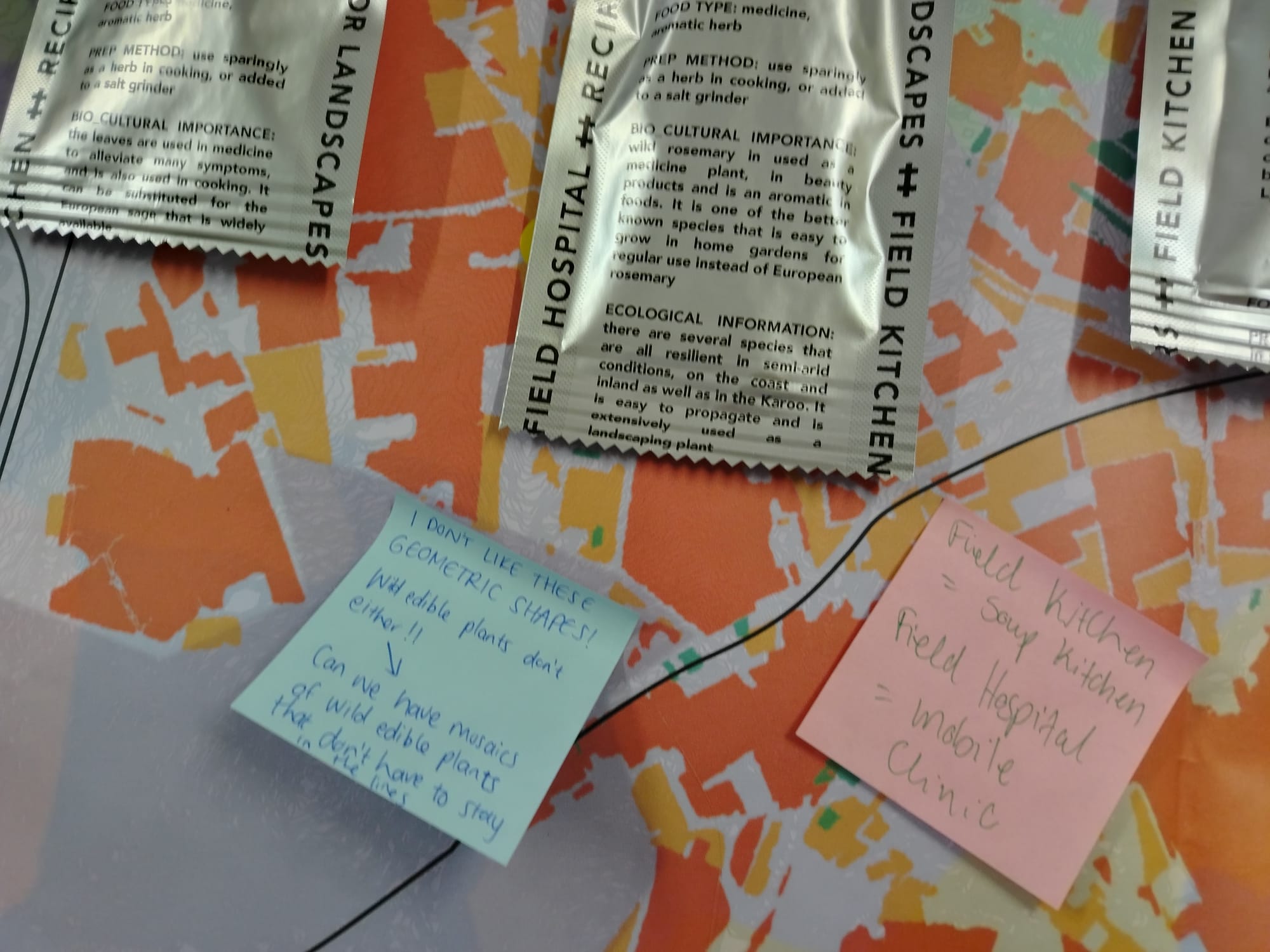
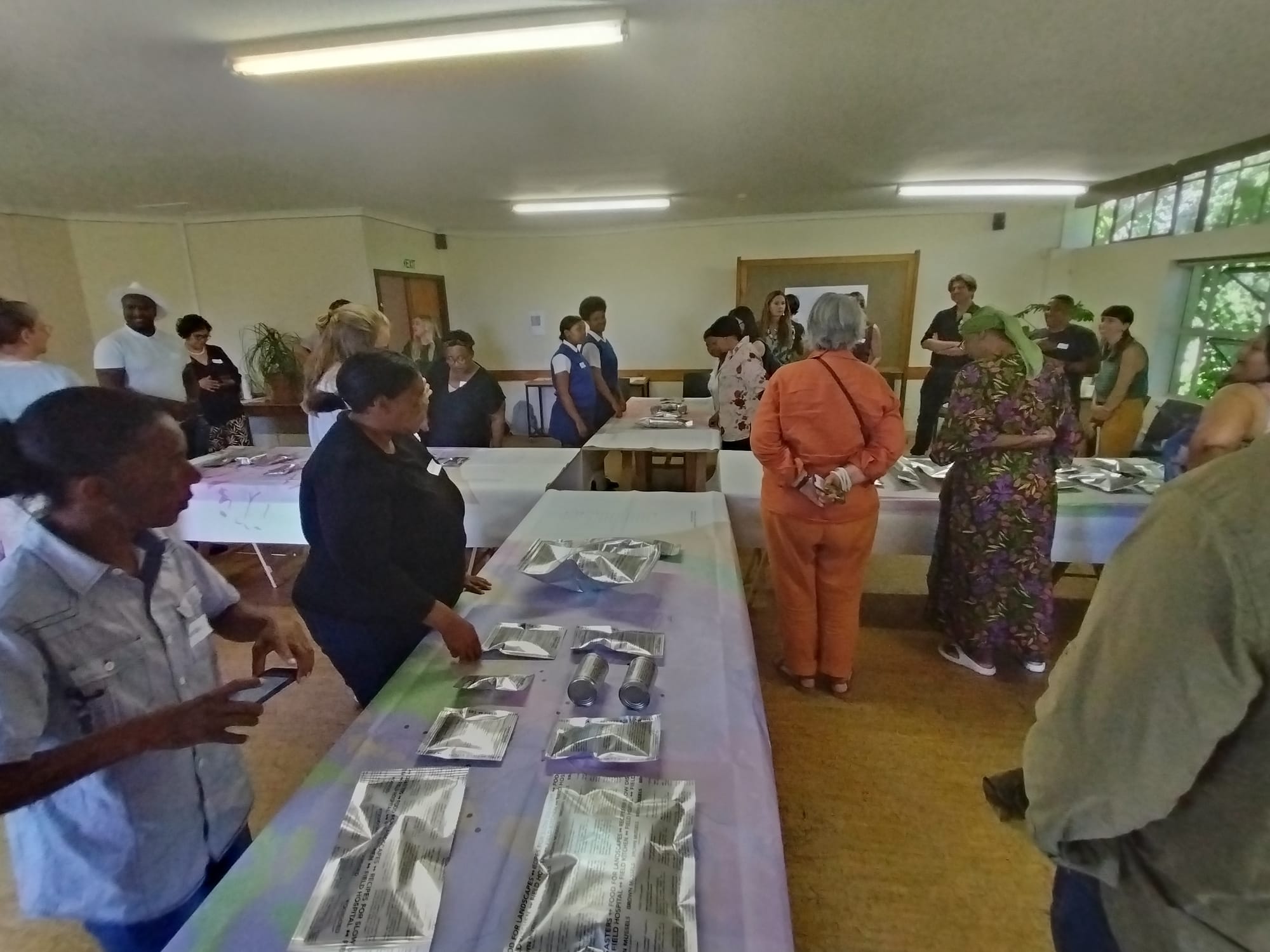
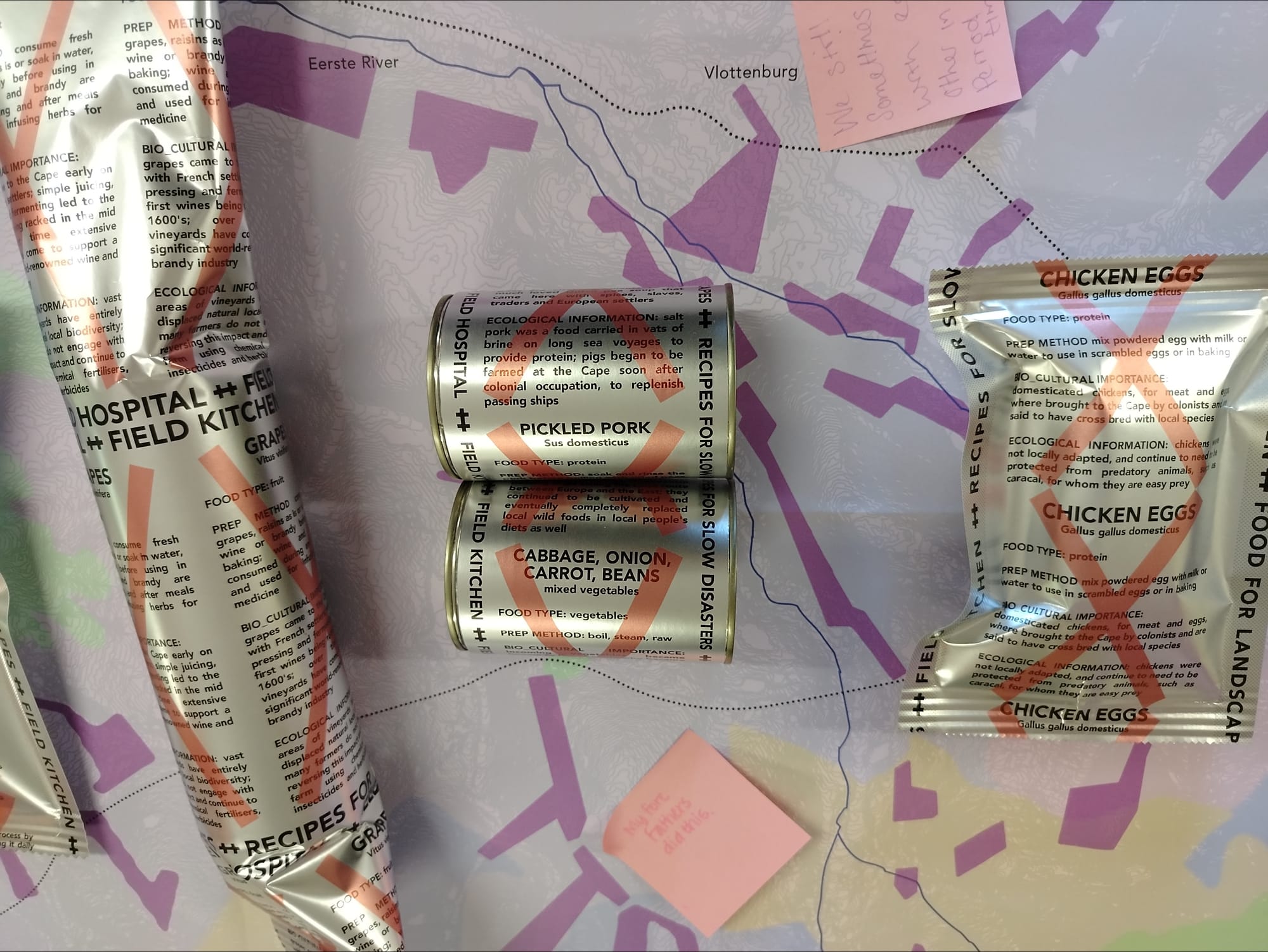
In order to "see" the long arc of this trajectory, our group was invited to take a "walk through time," to peruse each of the four maps representing the different eras, laid out on different tables arranged in the formation of a medical cross. On each table, foods typical of the era were also laid out on top of the landscape maps, sealed in foil packets to represent the aesthetics of the disaster zone.
Meandering around the room, we had the opportunity to study these maps and packaged foods, noticing for example the foil packets on the colonial era and the present day tables that were marked with a big red 'X'. These foods – such as the wine grapes grown in monoculture vineyards, and the cheap, highly processed bread produced from monoculture wheat sprayed in glyphosate – brought the heaviest damage to indigenous, biodiverse landscapes.
We noticed how the four different maps conveyed a story of erasure and enclosure, as the free-flowing swathes of Swartland Shale Renosterveld, Lourensford Alluvium Fynbos and Cape Flats Dune Strandveld on the earliest deep time map were steadily replaced with the purple shapes of privately owned farms and homesteads on the colonial map, and by dense red and orange rectangular patterns on the present day map, signifying industrial monoculture and suburban housing tracts.
First Course: Foods from the Deep Time Landscape - Seasonal, Cyclical, Relational
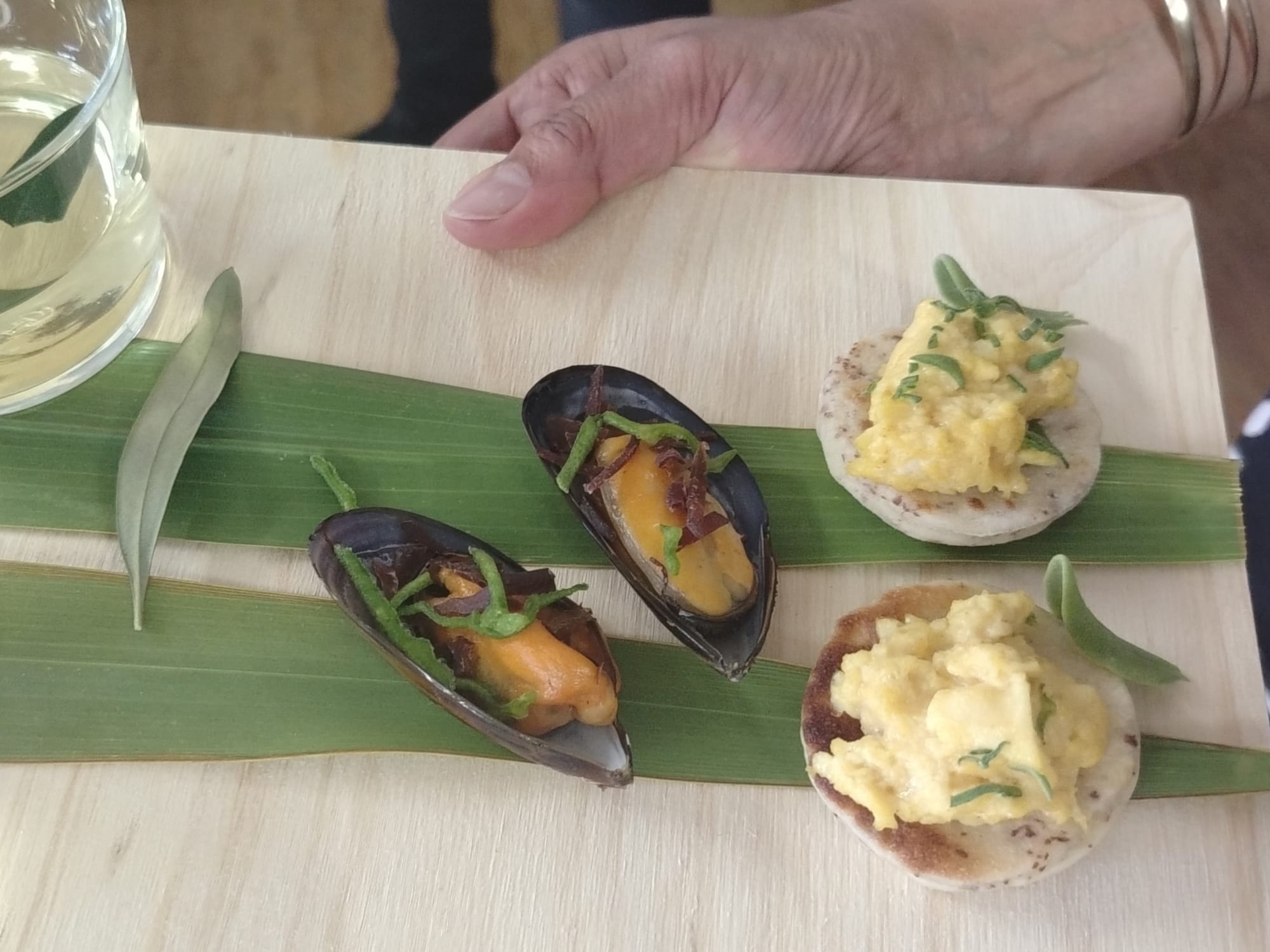
After our walk through time, it was time to eat. Introducing our first plate from the deep time landscape, Loubie explained that she had to piece together the menu by conjecture based on the archeological record and early historical writings.
As she explained, the pre-colonial local indigenous San hunter-gatherers and Khoi herders would have walked the land freely, moving with the seasons, seeking out temporary settlements near essential sources of water and salt. Knowledge, rather than ownership, was the key to their success. With knowledge of seasonal and ecological rhythms and relationships, the earliest peoples sustained themselves from the land and sea. They would have known when to harvest mussels at the shoreline, and how long to wait before digging up the edible corms of the watsonia plants, to avoid their bitter tannins. They might have followed animal tracks to locate food, and transported water in empty ostrich egg shells.
To evoke this time of seasonal abundance and attunement, we feasted on eggs (alas chicken, not ostrich) served on watsonia corm flatbread, with a mussel in its half shell, adorned with juicy, crunchy garnishes of ice plant, soutslaai and wild olive leaf.
South Africa's southern coastline was an important site for humanity's evolution. From studying coastal cave sites, archeologists believe an abundance of Omega 3 rich mussels helped to build our large homo sapiens sapiens brains, in tandem with the underground storage organs of the geophyte plants like the watsonia, which provided rich, energy dense sources of carbohydrates. The archeological record reveals ancient technologies used to process and cook these foods, making them tastier and more digestible. The local archeobotanist Elzaane Singels for example found many ancient grinding stones used for processing watsonia corms into meal, which people would have then shaped into cakes and cooked over the fire. The indigenous Khoi herders arrived in the region somewhat later with their fat-tailed sheep and started to introduce practices of managing the land with fire.
Second Course: The Food Landscape of Colonization and Slavery
Around the 1400s Europeans started to arrive, bringing their notions of religion and hierarchy, property and money. The Cape's position at the southern tip of Africa provided an important food and water replenishment station for European ships plying the Spice Route and staking new claims for expanding Empires.
From the initial vegetable gardens established to supply passing ships, more permanent European settlements grew. The Dutch enslaved many of the local populace, and brought more enslaved peoples from colonial outposts across Africa, Indonesia and elsewhere in Asia. While settlers from France and Germany brought their grape vines, everyone else brought their comfort foods too, giving rise to uniquely syncretic food traditions with a distinct local Cape Malay character.
Thus the first permanent, privately owned settlements appear on the colonial era map, and likewise the first red X's appear on foil packaged foods on the colonial table. Grapes, figs, wheat, pigs, chickens and cattle all made their entrance at this time, displacing the renosterveld landscapes that to this day remain the most vulnerable and threatened of the Cape Floristic region vegetation types, with less than five percent of the original landscape still intact.
The biodiverse commons, seasonal wetlands and migrating herds of antelope and ostrich all succumbed to a new agrarian landscape based in commodification and slavery. Rivers, water sources and alluvial floodplains with richest soils were appropriated from the commons, enclosed and fenced off under private ownership. A new language of dominance and control was reflected in these new patterns of spatial settlement. Intensive practices of ploughing and planting replaced the former land relationships based in observation and gleaning the ripe offerings of the moment. As a historian attending the workshop put it, the new Dutch land ownership regime offered four options of usage: put hooves on it, plant it, rent it out, or sell it.
With enslavement came harmful social practices such as the "dop" system – the distribution of alcohol to secure compliance and promote dependency in the labor force – seeding generational patterns of violence, alcohol abuse and fetal alcohol syndrome that persist to this day.
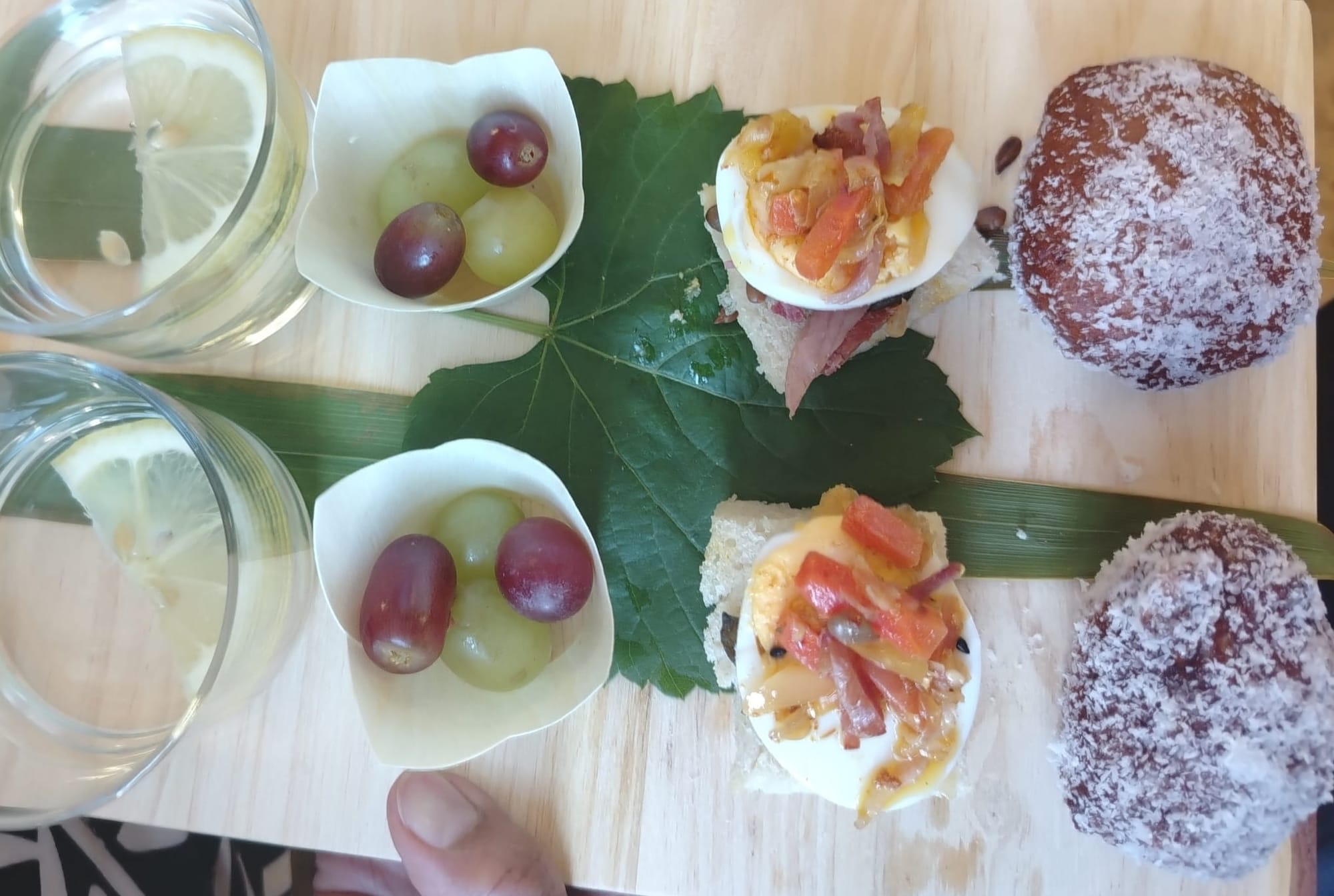
Our second course reflected all these upheavals. Our snack board contained a glass of lemon water, as Vitamin C rich lemons had become an important horticultural product, valued especially for keeping scurvy at bay during long sea voyages. We were also given grapes, and a deviled egg, topped with traditional atchar, a spiced relish of different pickled fruits and vegetables. The last item was a traditional Malay spiced pastry called koesister, soaked in syrup and dusted in coconut flakes.
As Loubie explained, the atchar and koesister were a nod to the fact that enslaved women would have been doing most of the cooking. Other markers of a heavily class-stratified society were also emerging at this time, influencing new beliefs and thought patterns in people. One way of controlling people was to make them look down on where they had come from, and to shame them out of their culture. Collecting food from the wild was labeled backward and uncivilized. As food became an indicator of social status, your sense of worth might be reflected in whether you ate the fillet or the offal, and drank the finest vintage or the dregs. Increasingly, food and wine production was directed towards colonial supply chains, reflecting the early onset of globalization. Land and people were enslaved, forced to produce food for Empire.
Third Course: Facing the Disasters of the Present
Moving from the colonial era into the present day, our conversation explored how much our current reality is shaped by legacies of colonial acculturation. As Loubie observed: "There's a process of beginning to turn your back on what's yours and beginning to adopt the values and belief systems of another culture that is rooted more in these hierarchy and dominance values. There's a shift in land and food relationships. A shift in the stories you tell your children. There's a process of erasure and propaganda as strong forces shape new patterns of being."
Is the landscape of today still steeped in slavery? On the map of today, there is a dense patchwork of settlement and ownership. Walking the land freely is no longer possible. The heavy use of chemicals, irrigation and other interventions to control production on the land have become completely normalized. The farmworker descendants of slaves continue to be exploited. The landscape is layered with problematic situations. When did farming become so intensive and extractive? Where did the mindset come from that equates value with productivity so strongly?
The predominance of red X's on the food packets of the present day table spoke powerfully to value systems we all are forced to navigate. Somebody remarked on how intensively strawberries are now grown in Lynedoch Valley, in linear fields covered in plastic sheeting. Yet at the same time, many of us could not deny that we enjoy our wine and our strawberries, even knowing the ecological and social harm that they cause. Through the lens of the present day, we were faced with our own complicity in the slow disaster.
A number of people spoke from their lived experiences. Although the dop system of distributing alcohol to farmworkers is now nominally illegal, a strong show of hands in the room indicated that the practice is still widespread. People began to name the past and present traumas, and the deep intergenerational patterns of trauma, that are still perpetuated in these extractive systems of dominance that are also self-perpetuating.
One participant spoke with deep emotion: "The brutality is heavy – and complex. As much as we can’t go back to pre-colonial ways, there need to be enough voices saying it’s enough. Otherwise the children have no future. My ancestors brought it here, they arrived with vines in their pockets. How can I rectify that?"
As Loubie summarized from the wider conversation: "Farmworkers are paid minimum wage. Cheap wine is still sold at 12 rand a bottle. Between the dop system and minimum wage, and the ways in which people are belittled, refused security of tenure, forced into transient and temporary farm work – It’s not called slavery anymore, but it’s still enslavement."
Those not intimately familiar with such realities then tend to judge people from uninformed perspectives – perpetuating narratives that cause yet more harm, painting young people for example with negative labels of being “passive” or “lazy” or “unmotivated” – when in fact they are deeply affected by the complex systemic barriers and situations of individual, collective and ancestral traumas playing out over generations.
As one young person spoke: "My mother works on the farm. Having seen my mother work for peanuts, standing the whole day, my pushback was making a difference in my own life. Pursuing studies, so my life can be sustainable. It wasn’t easy, going against the system, but then I was exposed to role models, lecturers, people who have a career and assisted me in believing there is a better future for my life.”
Meanwhile, the slow disasters of our local context have played out against a wider backdrop of planetary overshoot since about 1970. The modern industrial agricultural system so dominant in Lynedoch has also contributed significantly towards humanity's heavy global footprint, and towards breaching seven out of the nine key planetary boundaries as of 2025.
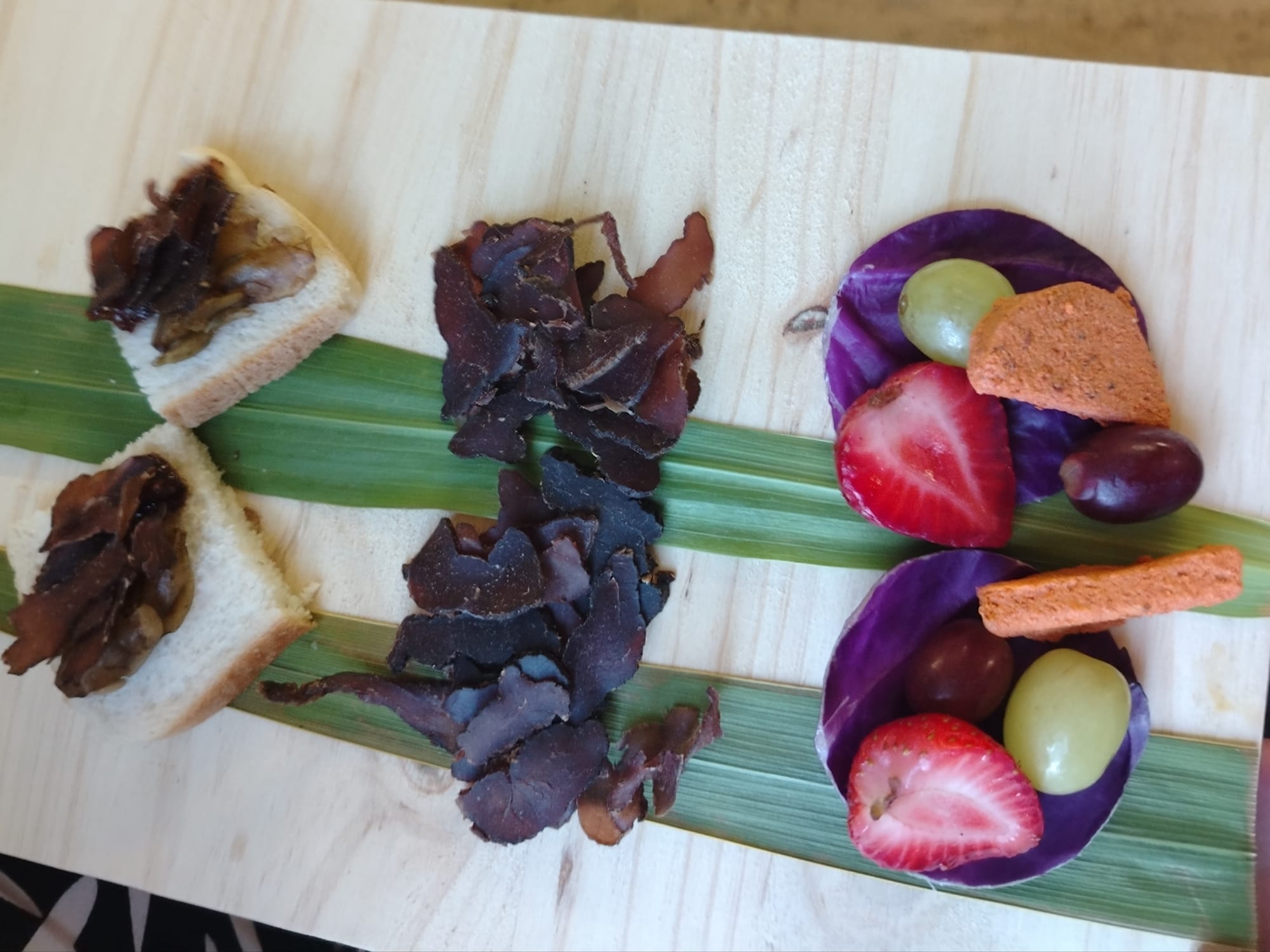
Our snack board of the current day reflected these fraught global and local dynamics. We were served cheap industrially processed white bread, dried beef biltong sweetened with fig jam, and grapes and strawberries on a cabbage leaf with a little pate of dried fruit called "meebos."
Fourth Course: Healing for the Future
With the new perspective of seeing slow disaster unfolding over centuries in the Lynedoch Valley, how could we start to look together towards healing? The landscape today is a result of all the things that people have imposed on the land – so what does the land itself want and need? What kind of food could grow in this landscape to restore health? What is the appetite for interventions to restore and regenerate relationships between people and land?
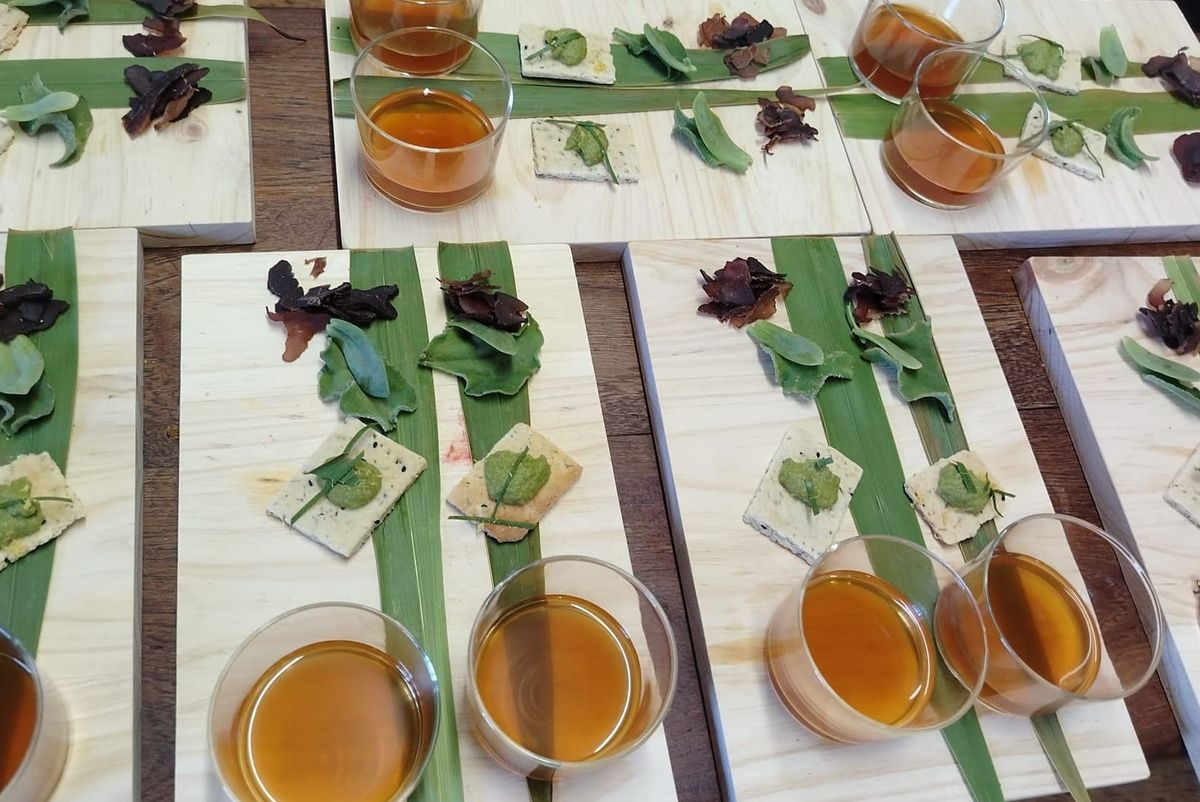
With these questions in mind, we were served the final course. Our future plate contained seasonal vegetables evolved and adapted for this landscape: veldkool (that looks similar to asparagus) and sandkool (that looks similar to long stem brocolli). Several of the deep time ingredients made a new appearance in this meal: the watsonia corm flatbread and indigenous succulent green leaves, along with dried biltong from springbok, an indigenous antelope. We also had a delicious herbal infusion prepared from local indigenous aromatic and medicinal plants.
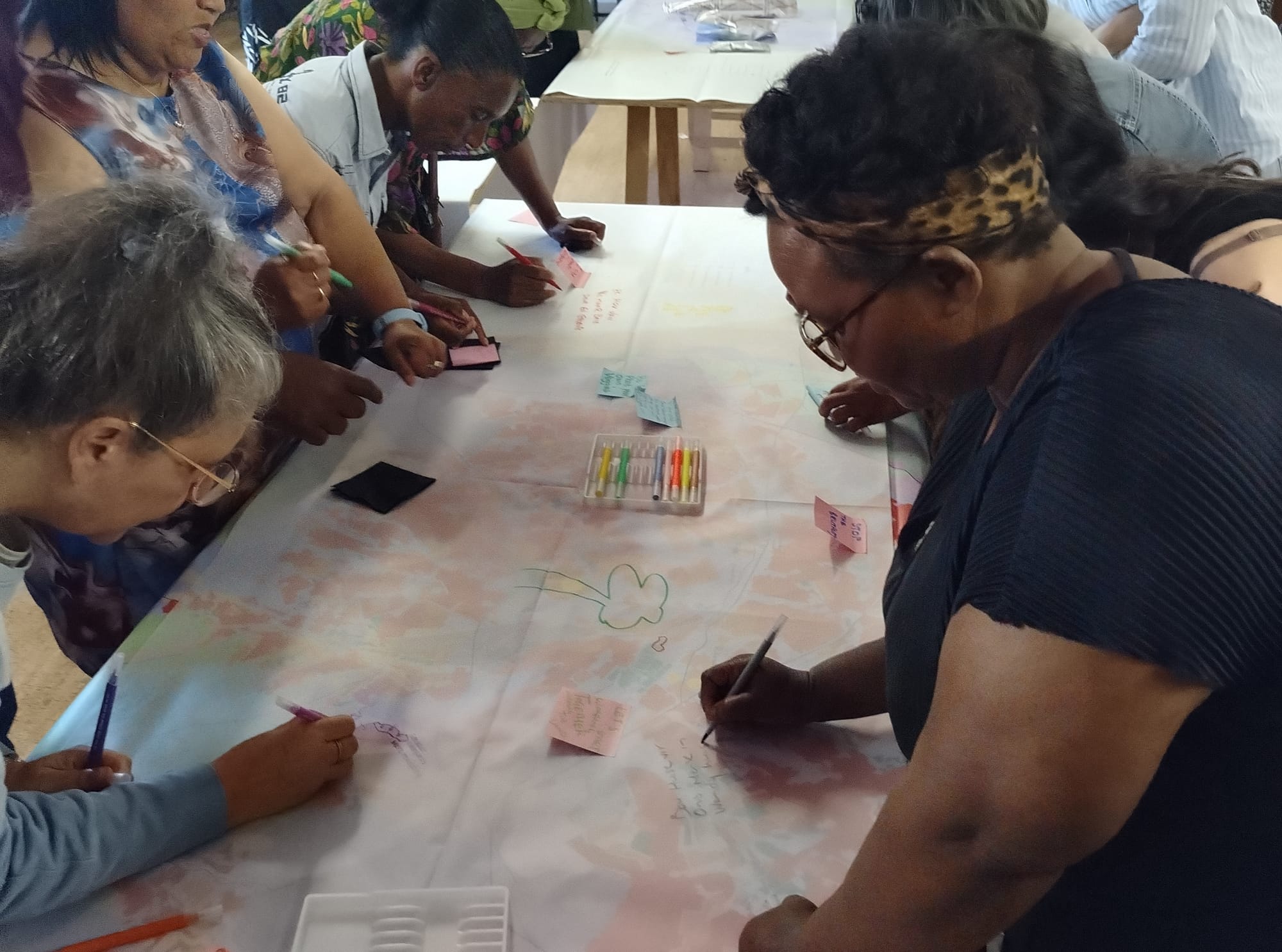
After an interval of writing down our ideas, thoughts and responses to the situation we were engaging with on the maps, we gathered back in our large circle for a last conversation, turning towards ideas of response and healing. The conversation organically mapped some of the different resources and needs of the community. People spoke of the community-led soup kitchens and mobile clinics that emerged during the COVID pandemic in loving response to peoples' unmet needs.
One man spoke about the large wine farm down the road that is growing organic grapes and rewilding 3,000 hectares of the indigenous renosterveld. Someone mentioned the sports field that can no longer be accessed by local children because the land was sold. Another spoke of the enormous wealth and land ownership disparity that stymies change, noting how unjust it is that the solutions are expected to come from those who have the least.
To me, many of the stories seemed to speak to people's erasure and invisibility on this land, as their needs for healthy food, health services and amenities are ignored by the powers that be. I was reminded of how the author Riane Eisler differentiates between cultures of dominance and cultures of partnership in her powerful book The Chalice and the Blade. In a dominance culture, power is used to oppress and marginalize people. In a partnership culture, power means taking responsibility for ensuring that everyone's needs are met.
The Valley Collaborative is a local grassroots initiative that has slowly been organizing in the community to find solutions to the challenges people face. There are community kitchens, sports centers, mobile clinics established by people coming forward with their love and dedication to the community to find resources to respond to peoples' needs.
One participant suggested that each family needs a little patch of ground to grow food on. This physical activity on the land would bring the family together and heal the land, he said. This would bring more resilience and healing of the past in a gentle way.
People spoke of their appreciation for the radical resilience of the community, and expressed wishes for a future that is more attuned to the landscape: "We need to nurture nature so that nature can nurture us as it was designed to," someone said. Others expressed wishes for more growing and sharing of food within the community, so that eating becomes simpler and healthier. Finding small pockets of space in different places in the community, this kind of healing and restoration might become possible.