'No Sheep, No Vikings' - In Conversation with Katy Chada
Norwegian regenerative systems designer Katy Chada has partnered with sheep, a biocultural keystone species, to restore the soils of the Lerfald Gård Farm, in the Midt-Norge Bioregion. Katy's bioregional weaving with the Monviso Institute inspires her deepening story of place.
By Megan Lindow
StoryMoss spoke with Norwegian architect, regenerative farmer and systems designer Katy Chada shortly after the 12th International r3.0 Conference in September 2025. This interview is the first part in a longer upcoming StoryWeave. Listen here:
The r3.0 conference aimed to ignite bioregional conversations both globally and locally, with more than 400 people taking part in the online proceedings through different place-based "confluence" gatherings held in bioregions across the Americas, Oceania, Africa and Europe.
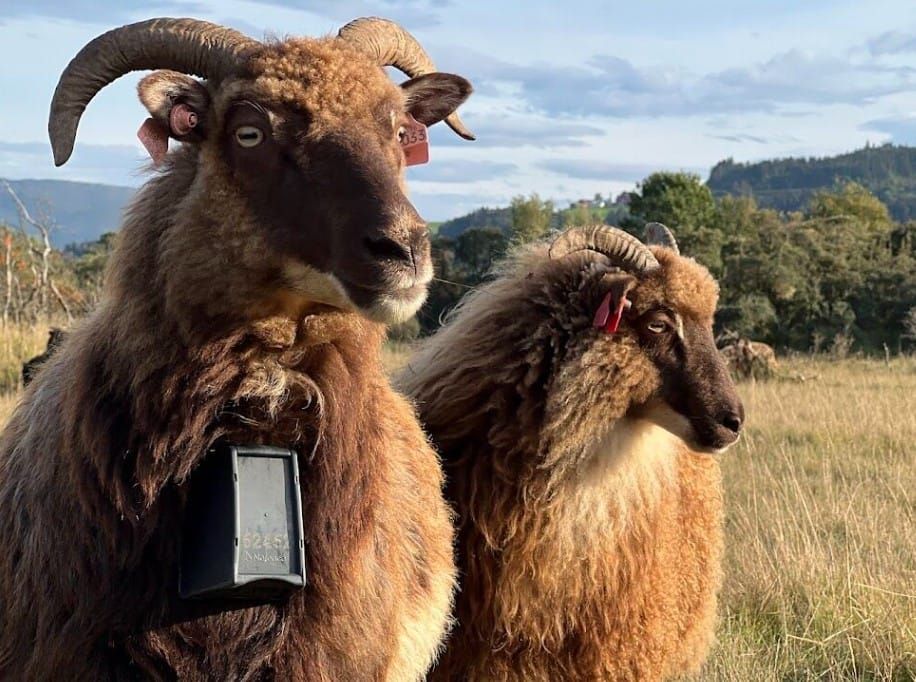
Hosting a confluence group at the Lerfald Gård Farm close to Trondheim in the Midt-Norge Bioregion, Katy gathered people "with a passion and a heart for wool." As she described, sheep are a cultural keystone species, and an important starting point for any initiative to regenerate the land or the local economy. The historic significance of sheep for this bioregion is reflected in the saying: "No Sheep, No Vikings."
"When we took over the farm it was quite abandoned, so we understood that we had to make a partnership with the sheep. We chose this very old race with horns which are well adapted to the rough climate of mid-Norway," Katy recalls.
With a theme of "Bioregional Curiosity," the Confluence brought together farmers, academics, craftspeople and entrepreneurs involved in wool products and circular design, as well as others in architecture, biology and food systems fields, to explore how all their different approaches in land regeneration, local value chains and interspecies collaboration may fit together – while immersing in the wider stories of this place where the Gaula River meets the Trondheim Fjord.
At the same time, the r3.0 Conference provided the opportunity to deepen an ongoing joint effort in "Bioregional Sensing" with the Monviso Institute in the Upper Po Bioregion of the Italian Alps, which, as Katy shared, has been a source of inspiration in her journey of transforming the farm into a "living systems lab".
With the Masters in Advanced Studies in Regenerative Systems at ETH Zurich, headed by Tobias Luthe, who is also co-founding director of the Monviso Institute, she has been involved in the Designing Resilient Regenerative Systems initiative. Last year, she and her family, along with colleague Kjersti Kviseth, hosted the team on the farm for an immersion in bioregional mapping, story gathering from neighbors, and paddling on the Gaula River.
"Collaborating with local hosts and the #DRRS team helped us see beyond our farm’s ecotones to understand the broader system. Developing our bioregional weaving map, linking forests with the nearby river system, expanded our understanding of the interconnected landscape," she wrote on LinkedIn.
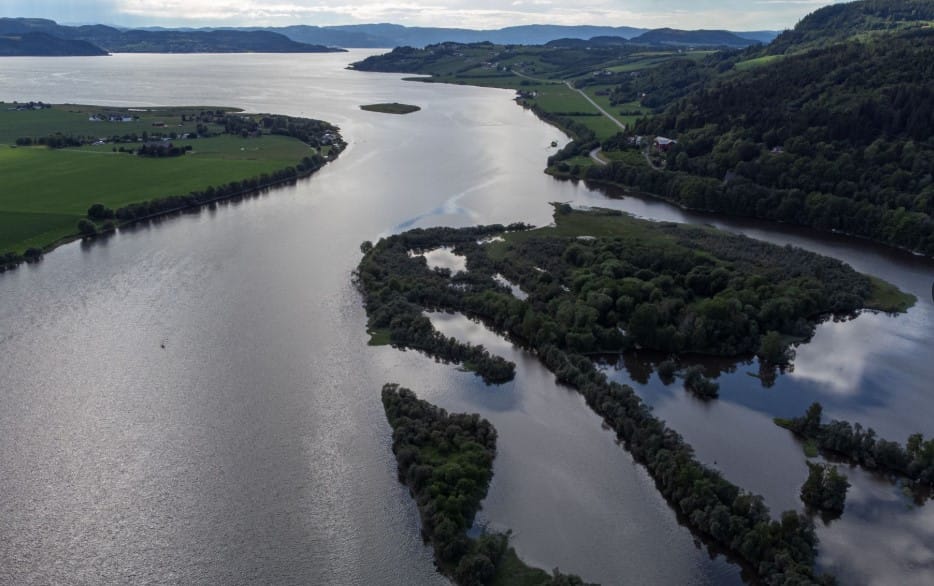
"Our place is a very special ecosystem that connects the River Gaula to Trondheim's Fjord," says Katy. This ecologically rich confluence, shown in the drone image above captured by Tobias Luthe, reflects Norway's landscapes of rivers and fjords, mountains and forests. It shows both how important water is for the region, and also the power of water that connects everything.
During the Confluence, participants walked the land accompanied by a biologist with expertise in migratory birds. Walking on a path along the river, the group was fortunate to see flocks of birds overhead as the biologist explained how the place is an important feeding and rest stop along their seasonal routes from the Arctic island of Svalbard to more southerly European destinations.
"Thousands of water birds gather here in this very special wetland," says Katy. "It's an important ecosystem for how rich it is, but it's also an important reminder of how everything in the world is interconnected. It's a beautiful place."
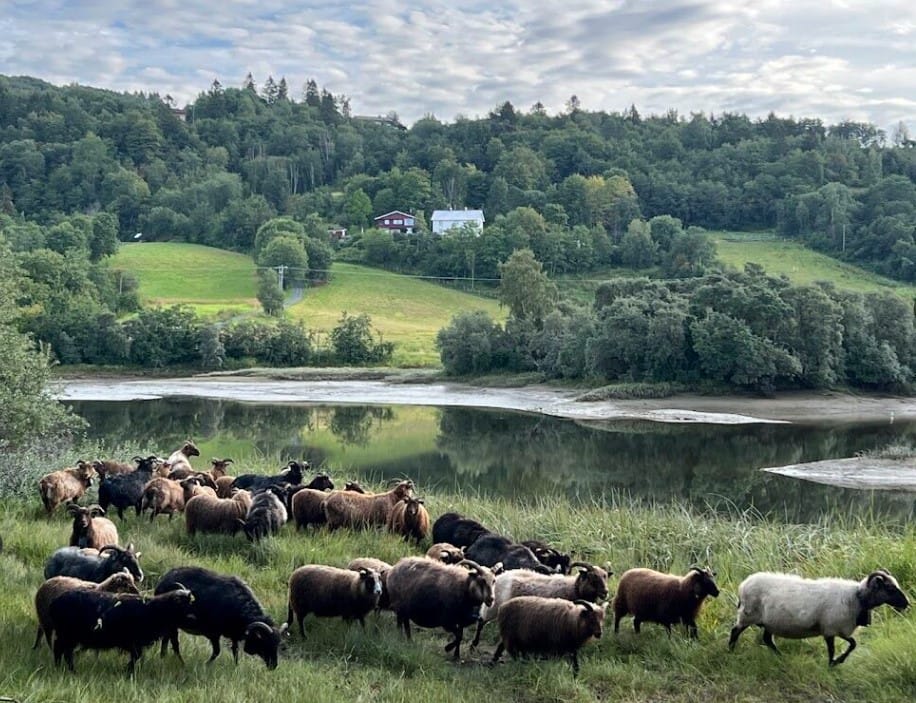
Interspecies collaboration is a defining feature of the bioregion. Moving across the skies and the water bodies, the birds weave their patterns of connection across wider geographies. Moving seasonally in a constant dance across the landscape they are so well adapted to, the sheep browse on many of the different plants and at the same time fertilize the soil.
The Lerfald Gård Farm is also located along the route of the "Cool Camino" – an ancient Viking pathway that once attracted pilgrims during the Middle Ages. A number of these old pathways, traversing exquisite natural scenery rich with Viking graveyards and turf-covered mounds, have been redeveloped into hiking routes for contemporary pilgrims who may prefer a cooler alternative to the iconic Camino pilgrimage routes of Spain and Portugal in the scorching summer heat.
At the farm, Katy is gearing up to host contemporary pilgrims continuing the thousand year tradition of walking these paths. She is busy building two hiker's cabins in collaboration with architecture students from the Norwegian University of Science and Technology where she works.