The waggle dance of the Bees: a perspective from southern Africa by Megan Lindow
Like the bees who dance to communicate, we too can presence with one another, co-regulating our nervous systems and tapping our innate gifts for knowledge, wisdom and healing.
By Megan Lindow
On the opening day of the Pocket Project's Climate Consciousness Summit, we are invited to take inspiration from "The Waggle Dance – How Bees Find the Best Way Together."
These are words I wrote previously in a deep dive of interspecies exploration with bees on my blog, Living Stories:
What would it be like to live in a sensuous world of touch and smell, of sound and vibrations reverberating through the warmth of the hive? What might it be like to mediate life and death and worlds beyond, as a somatic cell within a larger organism? To be part of a cross-pollinating collective of beings, at times co-regulating with one another through songs and dances and pheromones and touch? At other times foraging in intimate dances with flowers, imperceptibly healing and transforming the landscape? And also at times swarming together in joyous murmurations of flight, immersed in deep collective processes of rebirthing and finding new homes?
Drawing from that work, here is a perspective from South Africa, where a multi-species, multi-disciplinary artistic collaboration "Hiving and HUMing" shows the breadth of ideas, creativity and connection that a "bee-centric view" can inspire.
From the temple beekeepers of ancient Egypt to the ancient lost wax cast bronze sculptors of west Africa to the /Xam people of southern Africa who understood how to communicate with bees through vibration, human cultures have been shaped in diverse ways through their relationships with bees.
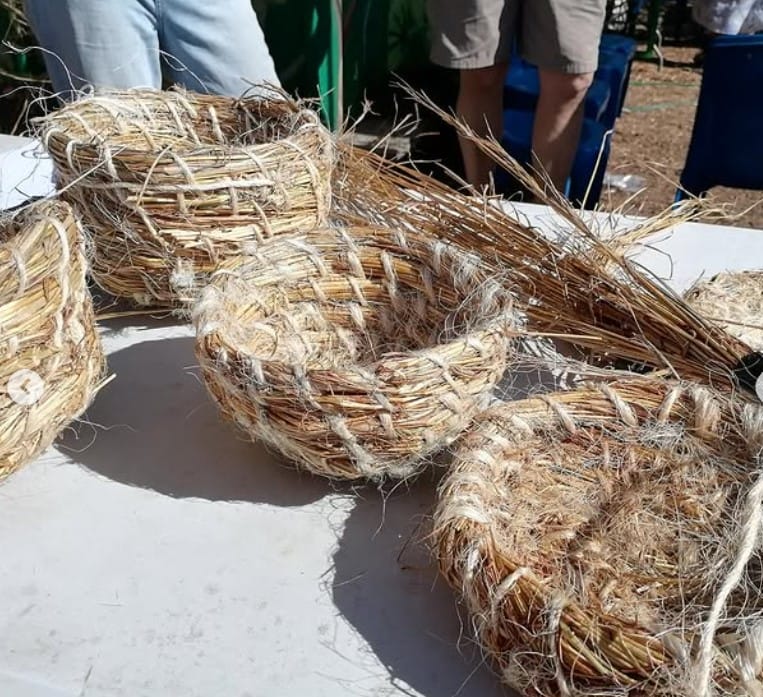
Searching for indigenous and non-extractive ways of relating to bees, Hiving and HUMing co-creators Dunja Herzog and Thembalezwe Mntambo delved back into some of these ancient practices and traditions. They gathered a swarm of modern day artists, beekeepers, urban farmers, social entrepreneurs, musicians, dancers, and even a researcher of archeoacoustics – the archeological study of culture and sound – to weave with the healing, hopeful and life-enhancing vibrations of the bees.
Participants in the project crafted resonant sound instruments, choreographed dance pieces, produced soundscapes, wove traditional grass basket hives, and shaped beautiful womb-like ceramic hives out of clay. In flowing, bee-inspired public conversations, people shared stories of urban displacement, trauma and intergenerational healing, radical resourcefulness and their aspirations for food sovereignty and creative freedom.
It seems that we humans are often intuitively drawn to the healing qualities of bees. As my friend the arts and drama therapist Marlize Swanepoel writes, the bees have many healing practices to teach us.
As she observes, like the bees who dance to communicate, we too can presence with one another, co-regulating our nervous systems and tapping our innate gifts for knowledge, wisdom and healing. When we dance together like the bees, we help one another feel safe and calm, and create the space to cohere as a group. When we connect with our instinctual knowledge as the bees do, we discover strengths and resources we didn’t know we had. And when we slow down and experience the sweetness of life, we are able to experience love, joy, peace, wellbeing and connection with ourselves and one another.
In the chapter of Karen Bakker's book The Sounds of Life: How Digital Technology is bringing us closer to the Worlds of Animals and Plants entitled “How to Speak Honeybee," she writes of the bees' intricate language of communication through movement and vibration. The Austrian researcher Karl von Frisch first theorized the waggle dance as the bees' very own form of complex language, referring to it as their "magic well."
Further research suggests that bees’ magic well of communication enables a keen level of social learning and cultural transmission, as if through the coherence of their visual and vibrational communication with one another, the bees build collective intelligence to make the colony function as a unified ‘cognitive entity’.
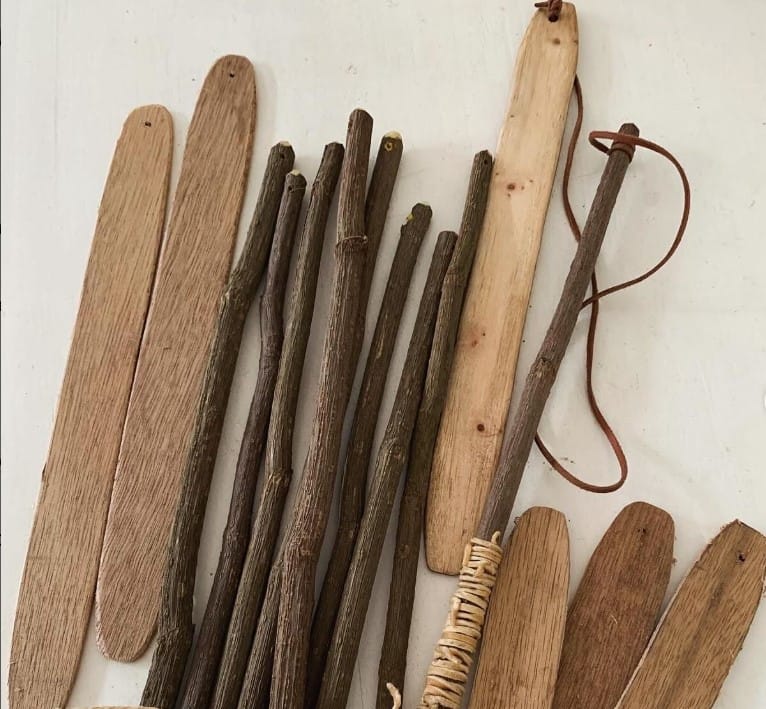
The indigenous /Xam San people of southern Africa appear to have understood this well. To the Hiving and HUMing conversations, archeoacoustician Neil Rusch brought his deep understanding of the vibrational qualities of bee language, and of the sensibilities which would have enabled our human forebears to commune with bees.
Like many indigenous peoples around the world, the /Xam speaking San people of southern Africa communicated with bees through vibration. Showing a photograph of a 2,000 year old San rock art painting depicting bees and honeycomb, Rusch pointed out the instruments wielded by the human figures in the painting. Studying the images, he and his colleagues from the School of Geography, Archaeology and Environmental Studies at the University of the Witwatersrand believed them to be a type of bullroarer known as a “!goin !goin,” once used by the /Xam to move the bees.
A bullroarer is an ancient vibroacoustic device, or aerophone — one of the earliest known musical instruments. It is composed of a piece of wood or bone, rounded at the ends and attached to a string or a cord. When it is swung around the head in a circle, it produces an intense, vibrating hum that sounds like a giant swarm of bees. As Rusch related, the /Xam people would very likely once have used their !goin !goin instruments to direct swarming bees to new hive locations that would be easy for them to access — a striking example of interspecies communication and empathy.
Rusch had brought along about eight or so !goin !goin aerophones which he made himself, and we were all encouraged to try them out. As overpowering vibrational whirring noises filled the room, it felt as though we were summoning the bees. I could feel their living, golden threads of connection all around me.
Through this, I felt the bees' particular gifts of creating warmth, cohesion and belonging. In the conversations at the gallery, the bees invisibly wove coherence through the different life experiences, perceptions and insights, creative approaches and practices shared by people. We are humans, of course, not bees — but we can choose to be inspired and emulate the qualities of bees that we value.
So now I live with the question: how can I learn from the bees to act as a somatic cell within the larger body of the living world, seeking and acting in ways to support the thriving of the whole?