StoryWeaving Salon with Phil Tovey and Sarah Hendel-Blackford: How does an otter or an earthworm experience risk?
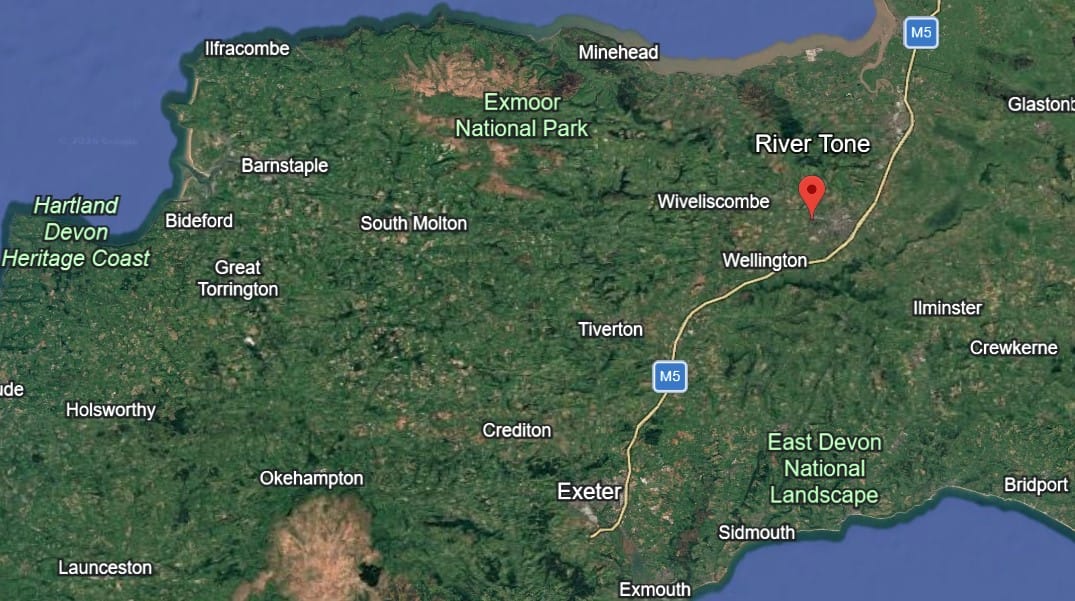
The "Risks Beyond Human Eyes" project engaged with the River Tone in Somerset, United Kingdom as a unique life-place of shared human and multispecies lineages dating back to previous glacial eras more than 11 million years ago.
In an era of deeply interconnected and accelerating systemic risks, from climate breakdown to warfare, chemical pollution and runaway AI, it hardly occurs to most of us humans to ask how mushrooms or glow worms or olive trees are affected. Many of us live so deeply inside of our own human-centered bubbles that we seldom think to look beyond them. But what if we could soar above the river with a birds-eye perspective, or burrow underground like an earthworm? How might our systems view of our own life-place, our bioregion, and the wider world beyond start to expand?
We explored such questions with Sarah Hendel-Blackford and Phil Tovey from the Accelerator for Global Risk Assessment (ASRA), who have been part of a ground-breaking initiative called "Risks Beyond Human Eyes." We connected with Sarah in the World Adaptation Forum, and were intrigued by her descriptions of ASRA's deep, ongoing work to bring glorious, wild nature to the the center of risk assessment and response practices.
The six-month "Risks Beyond Human Eyes" project (December 2025 - May 2026) has brought together community members from the River Tone catchment and bioregion, located in Somerset in the southwest of England, to map and explore the risks of the river through the eyes, senses and needs of the otters, kestrels, earthworms, red deer and Atlantic salmon who live there. Unlike most frameworks for thinking about risk, this project engaged with the River Tone as a unique life-place with a distinct biological, social and cultural heritage, shared in human and multispecies lineages dating back to previous glacial eras more than 11 million years ago, said Phil, who serves as ASRA's Director of Nature Centric Approaches.
"If you take seriously the interdependences of systems, and the aim of moving away from systemic risks or transforming them, it throws up philosophical, technical and political challenges," he observed. The project's aim was to explore and prototype what it actually means in practice to center our more-than-human kin in risk, resilience and governance. The project utilized various tools and frameworks, including a More Than Human Lens toolkit developed by philosopher Miguel Prado Casanova and anthropologist and UX designer Patricia Fraga Pérez. It has been a collaboration between ASRA and the University West of England (UWE), funded by the Ecological Citizen(s) Network.
As Phil wrote in a blog post:
"The aim is not to romanticise nature, but to stretch the boundaries of what we notice beyond human eyes. Seen this way, a change in water chemistry is not just a data point but a disruption in migration; a shift in land use is not just economic development but the fragmentation of a habitat network. What emerges is a different map of risk: one that reveals stresses and cascading effects long before they register in conventional systems. The hope is that these insights can begin to inform how decisions are made locally, expanding the frame of risk beyond human priorities, and towards the wider community of life that ultimately determines whether those priorities can be sustained."
This was a fascinating and eye-opening conversation! Listen to the podcast (with apologies for a few sound glitches at the 12 minute mark!):
Or watch it on YouTube:
As Phil explained, each of the five animals the project focused on highlighted important perspectives that conventional risk management approaches fail to see. "Every time you do this work and extend beyond a single species, you get into this explosion of complexity with the millions of species that make up our ecosystems. We chose to focus on the non-human animals that we did, because they give us the different dimensions of the system," he said.
- Kestrals provide the birds-eye view of the river system, bringing the aerial domain, which is also the perspective shown on our human maps.
- Amphibious Otters glide along at the water's surface, and also swim and dive below, weaving between water and land.
- The rare and critically endangered Atlantic salmon connect the river and the sea, migrating as far as Greenland and making the perilous return to heavily canalized and polluted river spawning grounds.
- Red deer roam the landscape as large grazers, whose lives are intimately engaged with the river.
- Earthworms live underground, highlighting the "invisible" dimension of the soil.
Our conversation opened up a fascinating inquiry which surfaced many questions, so we will dive deeper with Phil (and possibly his colleagues) in a follow-up conversation to explore the collaborative process of working with non-human animals, the scientific work behind this project, and how the project is developing animal-centric risk responses.
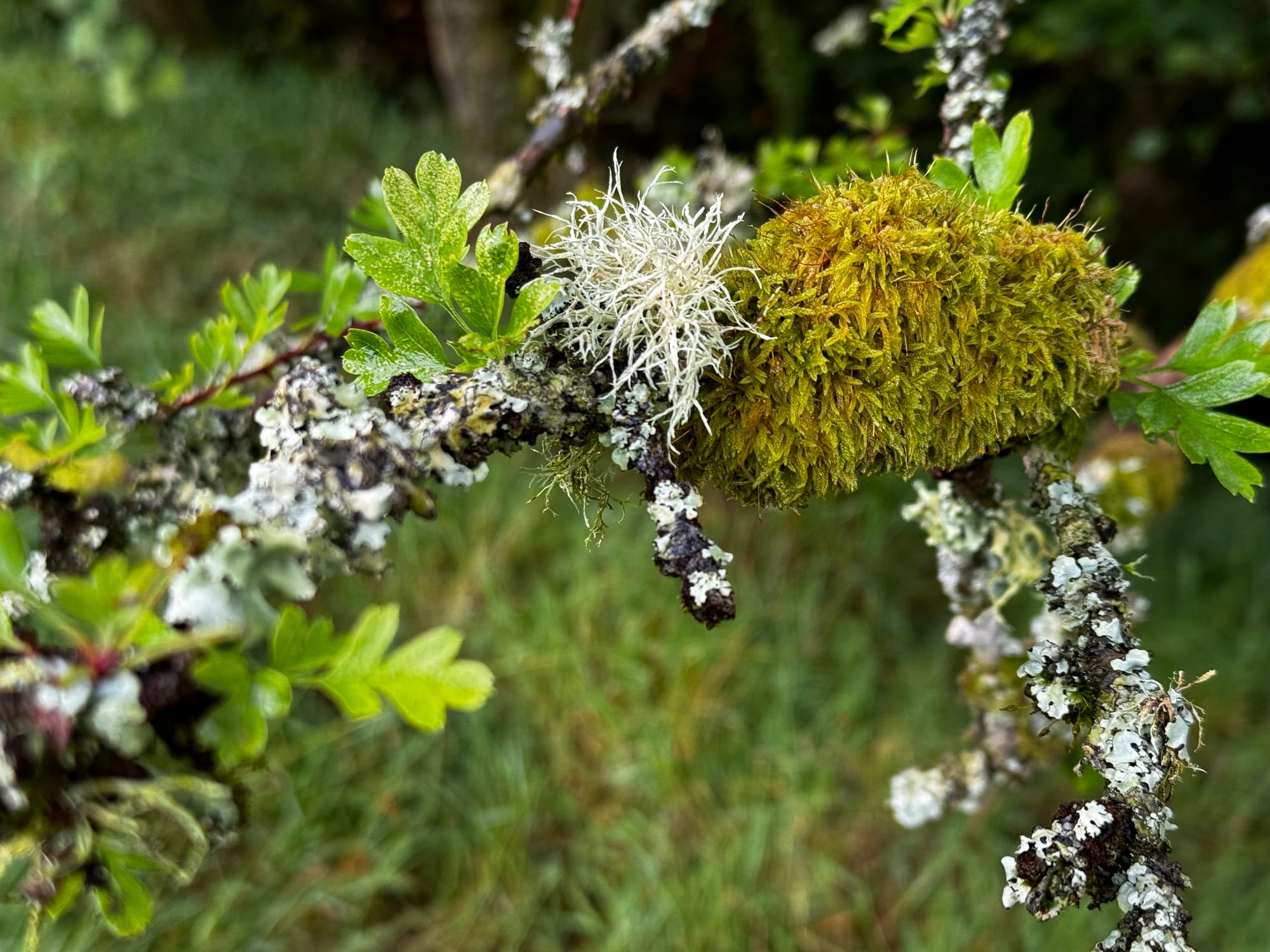
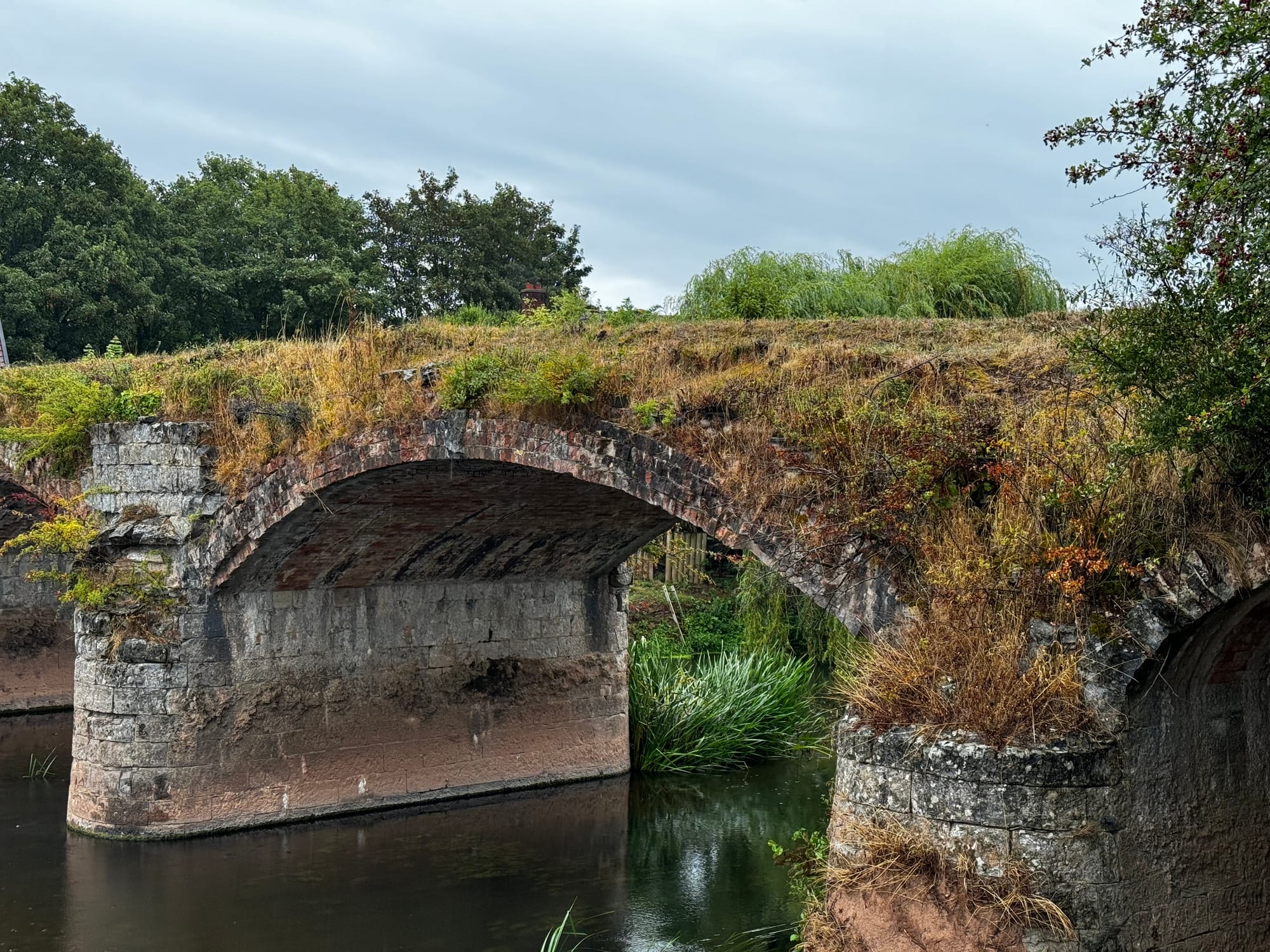
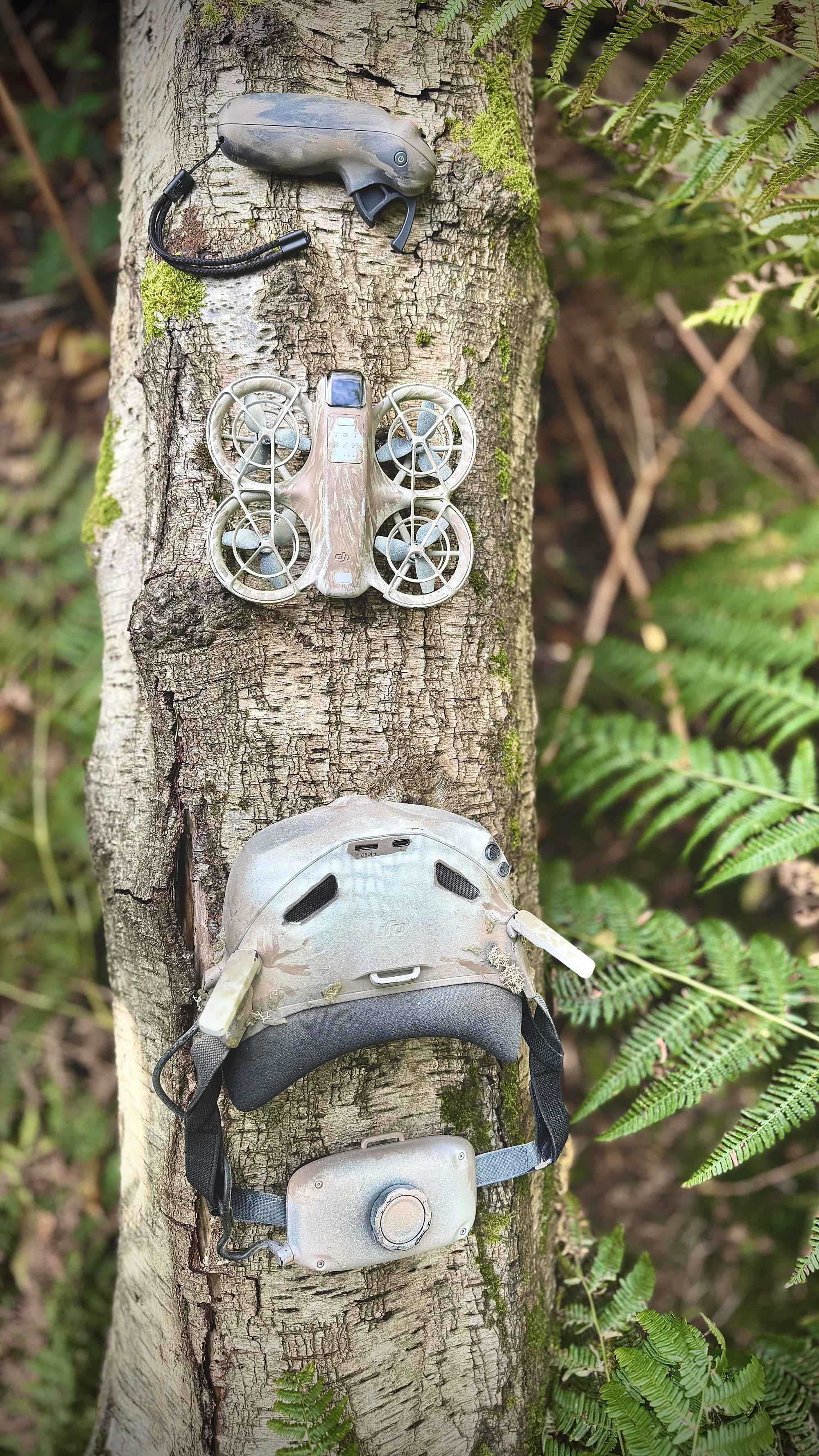
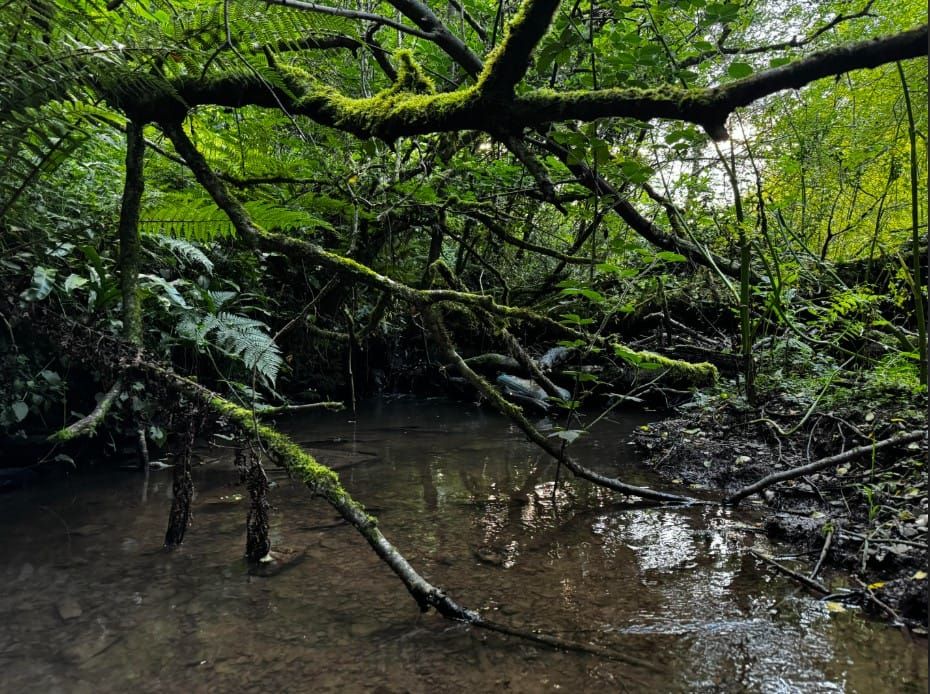
Pictures of the River Tone by Phil Tovey, featuring DJI Neo drone custom painted, Lydeard Wood, Back Stream; Temperate Rainforest fragments near the headwaters of Halse Waters; the 19th Century aqueduct near Creech St. Micheal, lower reaches of River Tone; Lichens and liverworts at Tripp Bottom, near the second source of River Tone.
Our StoryMoss vision is to be a heart-centered StoryWeaving, StoryHealing collaborator, engaging with regenerative artists, scientists, healers, practitioners and communities around the world, co-weaving stories from different perspectives and ways of knowing, and infusing them with joy, creativity, beauty, deep ecology, eco-spirituality and Active Hope. Please hit the subscribe button to support and follow our work, and find us on YouTube, Substack, LinkedIn and Instagram.