If I die today - Active Hope Keeping by Yasmin Mohamud - MaEarth and r3.0 Weave on Relational Kinship
How does a land healer sustain herself in the modern world, attending to health and family issues while growing a beautiful project in a far country, her homeland so close to her heart and her ancestral lineage?
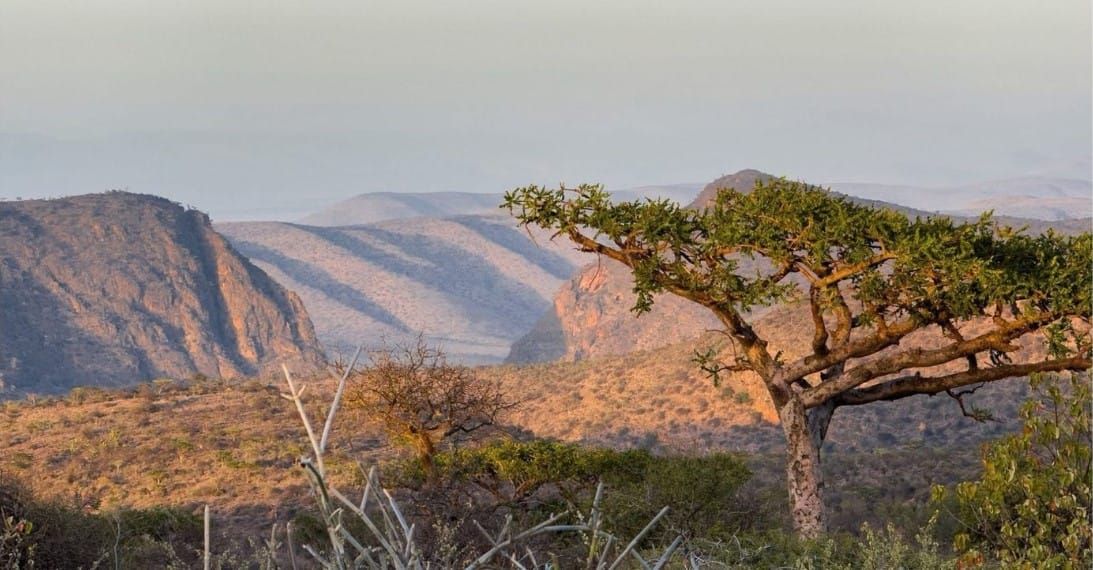
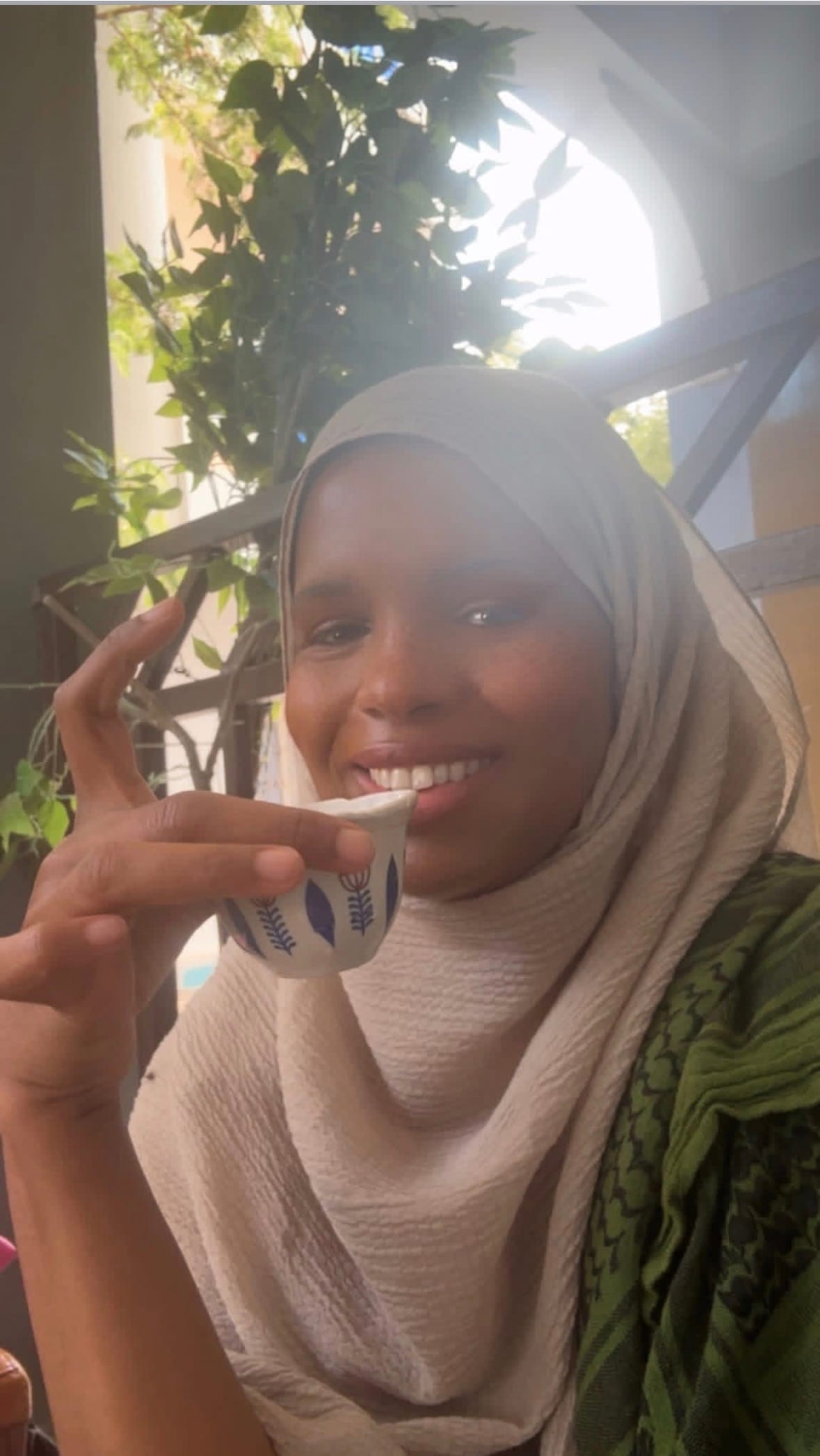
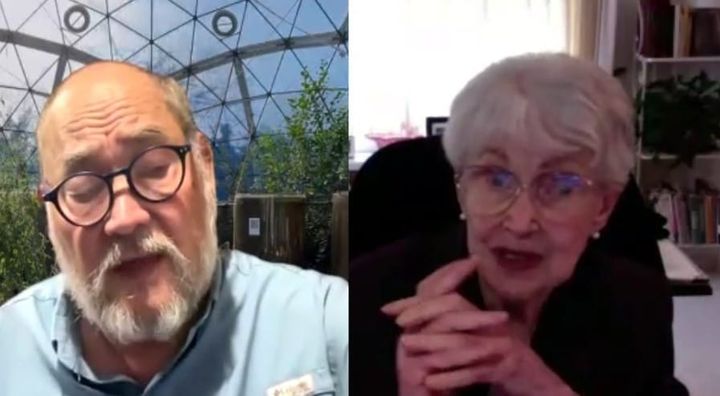
With Yasmin's piece, we celebrate the journey in the last six months of a steadfast, resilient young Somalian Canadian woman now living in Toronto who has spent years building a land restoration project in her homeland of Somalia, in the Nuggaal Valley, her grandfather's ancestral land. We met early Spring in the context of the Global Earth Repair Convergence where she was a speaker in our first campfire. We became friends and have enjoyed weaving together for new ideas and life energy. We share our short recorded conversation here:
Yasmin's land and local community healing journey has been glorious, inspiring and fulfilling – and also filled with hardship and trepidation. Yasmin and her small team have poured countless hours of strong, joyful effort into weaving, co-creating, organizing and reaching out so that Dryland Solutions can be sustainable, and so that all programs that have launched can continue to flourish and scale to the vision of restoring 30 hectares of land by 2028. Early on, she had the intuition to connect with ecologist and filmmaker John D. Liu for mentorship and guidance. It was an important move for which she expresses eternal gratitude. The Nuggaal Valley DryLand Solutions project became an Ecological Restoration Community that you can discover here:
John D. Liu's extraordinary restorative work in The Loess Plateau (China) has truly inspired hundreds of land regenerators around the world. It is a beautiful testimony to John's vision of a healed world focused on the wellbeing of all, in local communities, away from material consumption and greed. We are happy to share's John's most recent podcast here with Raphaël Esterhazy from the Deep Seed Podcast, in partnership with Commonland where John is an Ambassador. Please enjoy John and Raphael's conversation:
Like all resilient regenerative leaders with big dreams, Yasmin, who lives most of the year in Toronto, Canada, also has to ensure her right livelihood. She finds herself in a job transition while tending to health issues. She is actively searching for her new livelihood while looking for funding for her organization and the small team who manages the projects on land. Their work needs long-term, sustainable support. This double funding effort, as many of us are familiar with, is exhausting and energy draining. Yasmin is a sought-after speaker on the regenerative circuit and is a strong voice for the African Horn Land restoration efforts. In July this year Dryland Solutions was part of the MaEarth Round 3 quadratic funding campaign, raising $4,300. In her funding efforts since Spring, Yasmin has secured a $50,000 land restoration grant from Ecosia that is asking for larger donors to commit to her work as well so that the grant can be released.
Please help Yasmin connect with donors, and step up if you are able to help support Dryland by making a donation and becoming a recurring donor here at Global Giving:
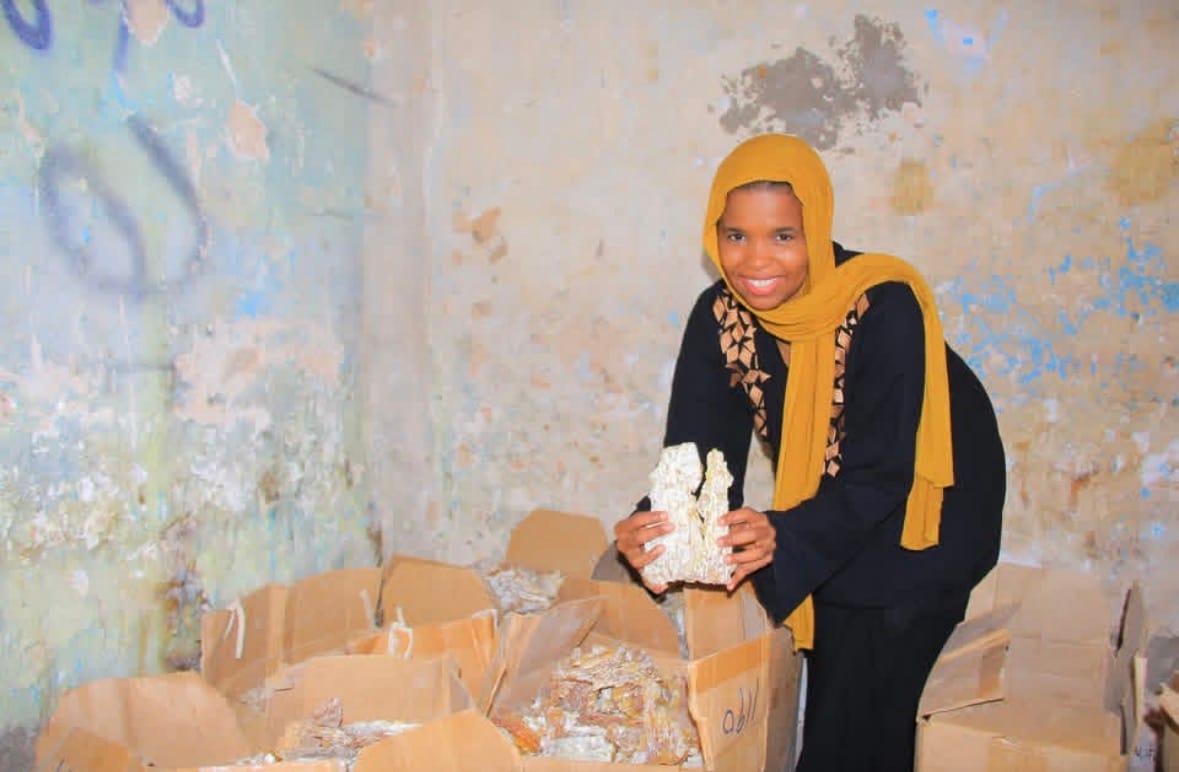
https://www.globalgiving.org/projects/help-keep-somali-frankincense-forests-alive/
This is an unprecedented resilience, peace making and social justice endeavor to create and support beautiful new stories emerging in Somalia after generations of war and uncertainties. Yasmin wants to be an active part in the healing, the flourishing of her peoples and more-than-humans. It is her calling and she has actively answered it for years now. We admire her, her eternal smile, softeness and aliveness. She is currently on Umrah a pilgrimage in Mecca on her way to Zanzibar Tanzania for the SeaWeed Learning trip invited by Musterseed Trust Foundation (https://mustardseedtrust.org/project/healthy-seaweed-cafe-tanzania/) and back home in Somalia sharing her new regenerative seaweed knowledge and new connections with her community. We will update you when Yasmin is in Zanzibar and back in the Nugaal Valley!
How does a land healer sustain herself in the modern world, attending to health and family issues while growing a beautiful project in a far country, her homeland so close to her heart and her ancestral lineage? When we first evoked the project of a larger article on the journey of a young Somalian woman wanting to give back to her native land while attending to her life as an economic migrant across the world in Canada, Yasmin chose to write this beautiful love message to her land as she regroups and digs deeper for more active hope, stronger intention seeking agency, self-leadership, strategic partners and steady larger funders to release the Ecosia grant. We are honored to share a deep spoken word piece here.
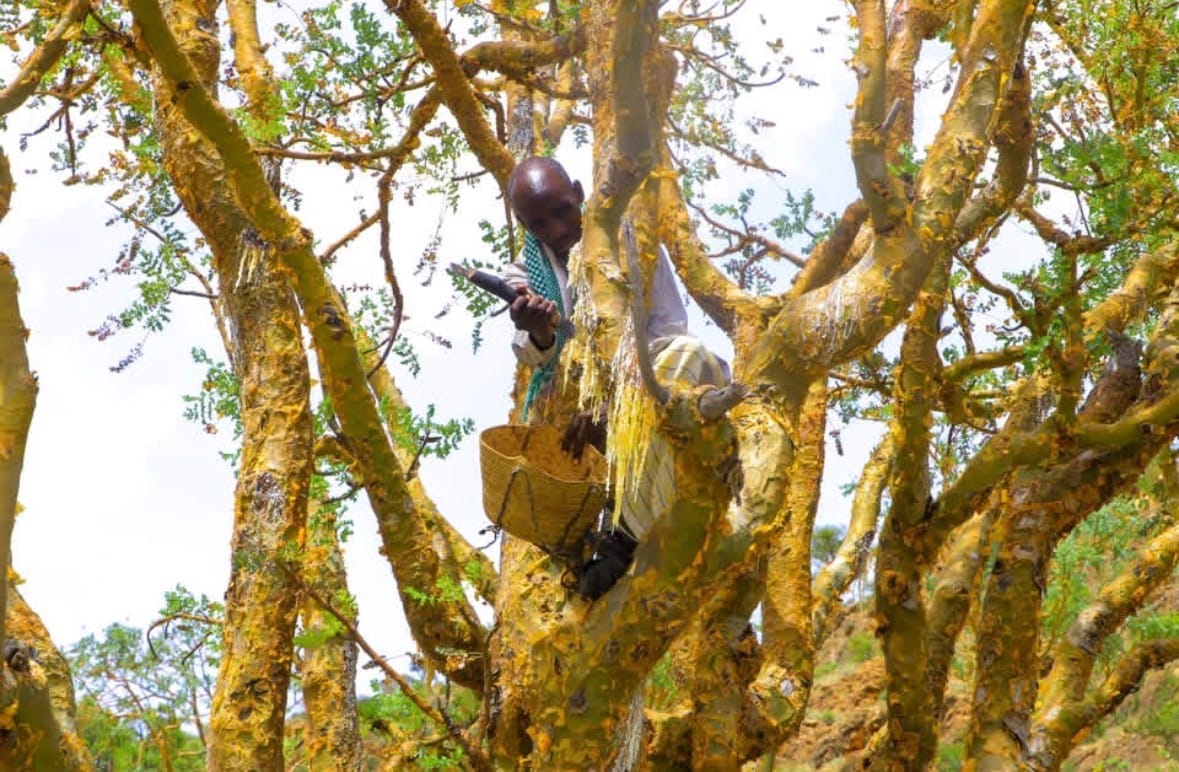
Please watch this 4 minute-video of the Nugaal Valley before the poem:
Yasmin's ode:
If I die today, I want you to know this: I tried to leave something better than I found it.
I don't mean that in a grand way. I don't believe one person can change a country, and after everything I have seen and learned, I am probably less certain of easy answers than I was when I began.
But I have come to believe deeply in the responsibility to do what we can with what has been placed in our hands.
For me, that journey began in 2014.
I went for Umrah, and afterward travelled to Somalia with my younger brother. I thought I was simply visiting home. I didn't know that I would leave carrying questions that would follow me for years.
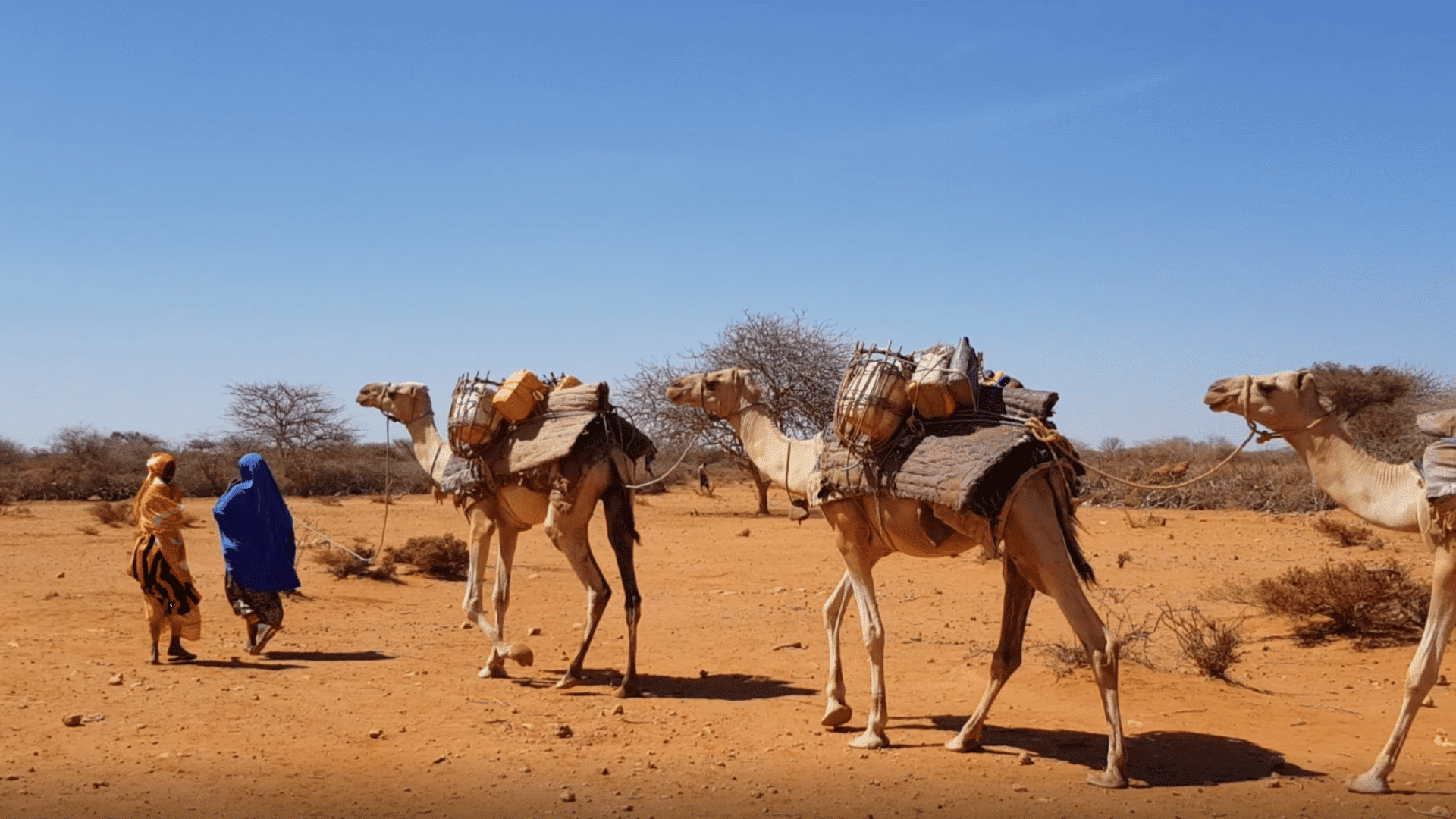
As we travelled through villages and towns, I was struck by the beauty of Somalia—the vast landscapes, the animals moving across the land, the communities we passed, and the magnificent ocean.
But alongside that beauty, I saw a land under enormous pressure.
Trees were disappearing. The soil was exposed. Water was scarce. Grazing land was struggling. Much of the food people depended upon was travelling thousands of kilometers to reach communities living on land that had sustained generations before us.
I remember wondering:
How can a land with so much beauty and potential also carry so much difficulty?
I didn't understand what I was seeing then.
I only knew that something was happening to the land, and somehow it seemed connected to everything else.
When I returned to Canada, I began trying to understand.
I learned about soil degradation, water systems, food security and dryland restoration. Slowly, things I had seen as separate began to connect.
When land loses its ability to hold water, vegetation suffers. When vegetation disappears, grazing becomes harder. When farming and pastoral livelihoods become more fragile, families lose income and food security. And slowly, people begin to lose something we don't talk about enough:
choices.
That realization changed the question for me.
I stopped asking only, “What is happening to the land?”
I began asking:
“If degraded land can take so much away from people, what could restoring it give back?”
That question took me to places I never expected.
I studied permaculture. I learned from restoration efforts in Jordan, China and across the Sahel. I saw communities working with water, soil and vegetation in ways that allowed damaged landscapes to become productive again.
And one lesson stayed with me:
Degraded does not always mean lost.
Sometimes the possibility of return is still there.
But as I learned from examples around the world, another question became harder to ignore:
Where was our example in Somalia?
Where could a Somali farmer, pastoralist or young person stand on Somali soil and see what restoration might look like here?
Because sometimes knowledge is not enough.
Sometimes we need to see possibility before we can imagine ourselves inside it.
So in 2018, I returned to Somalia.
I planned to stay for one month.
Somehow, that month became six years.
I came wanting to serve my community. But those years taught me that service is not about arriving with answers.
It begins with listening.
I met farmers, pastoralists, elders, environmental leaders, local organizations and government staff who already carried knowledge I did not have. Some understood the land through generations of experience. Others had been working quietly for years with very limited resources.
And I began to understand that perhaps my role wasn't to ask:
“What can I come here and fix?”
It was to ask:
“What is already here? What can I learn? And what can we strengthen together?”
That changed the work for me.
Eventually, a community entrusted us with 187 hectares of land that would become the Togga Watershed Model Farm.
I still think about the significance of that trust.
Because it wasn't empty land.
People had grazed animals there. Families had depended upon it. Elders carried memories connected to it. The land had a story before we arrived, and it will have a story long after we are gone.
So receiving those 187 hectares wasn't simply about having somewhere to work.
It was about being trusted with something.
And trust creates responsibility.
The question was no longer simply, “Can we make this land green again?”
It became:
“Can restoring this land make life better for the people who depend upon it?”
That question has stayed at the centre of everything for me.
Because over time, I have come to understand restoration as something much larger than planting trees.
When water stays in the soil, vegetation has a chance to return. When vegetation returns, grazing and food production can improve. When the land becomes more productive, livelihoods can grow.
And when people have livelihoods and opportunities, they have more choices.
The choice to remain.
The choice to build.
The choice to imagine a future.
And perhaps that is what has moved me most through all these years:
the relationship between land and dignity.
A healthy landscape cannot solve every human problem. I know that.
But neither can we ignore what happens when the landscapes people depend upon can no longer sustain them.
Somalia's challenges are enormous.
Six years there taught me that more clearly than any book ever could.
I know one person cannot solve them.
One organization cannot solve them.
One farm cannot solve them.
And 187 hectares cannot restore an entire country.
But I have also learned that the size of a problem should not determine whether we contribute.
So I no longer spend as much time asking:
“How can I possibly solve something this big?”
I try to ask something smaller:
“What has been placed in my hands?”
Maybe we cannot restore an entire country.
But perhaps we can restore one watershed.
Protect one tree.
Capture one drop of rain.
Listen to one elder.
Learn from one pastoralist.
Help one farmer experiment.
Give one young person somewhere to learn.
And perhaps create one example that allows somebody else to stand on their own piece of land and think:
Maybe this is possible here too.
I think that is how I understand change now.
Not as one person doing something extraordinary.
But as many people doing what is theirs to do.
What began for me in 2014 as a visit became a question.
The question became a search.
The search became six years of learning, mistakes, relationships, service, persistence, determination, and trying.
And somewhere along the way, Somalia stopped being somewhere I had returned to. It became home again.
So if I die today, I don't want you to remember me as someone who had all the answers.
I didn't.
I still don't.
I would rather you know that I cared enough to try.
I saw something happening to the land and chose not to look away.
I asked questions.
I followed them.
I learned from people.
I got things wrong.
I kept learning.
And with whatever was placed in my hands, I tried to leave something that another person could build upon.
Maybe that is what legacy means to me now.
Not what we keep.
Not what carries our name.
But what continues without us.
A tree whose shade we may never sit beneath.
Land restored for people we may never meet.
Knowledge carried forward by someone younger.
A possibility created that another person takes much further than we ever could.
So if I die today, I want you to know this:
I tried.
I tried to leave the land—and the possibilities it holds—a little better than I found it.
And I hope those who come after me do far more with it than I ever could.
Because perhaps the things most worth doing are not the things we get to finish ourselves.
Sometimes our responsibility is simply to begin, to tend, and then to trust others to carry it forward.
That, to me, is legacy.
And that is where I have learned to find hope.