Pete Jeffs - Remembering and Co-Leading with Natôquhsunônak (our relatives)
Cultural Ecologist Dr. Pete Jeffs reflects on presentations and conversations with Mike J. Thomas, Maggie Favretti and Rashad Young at the Peqot Museum Confluence at the r3.0 Conference 10 September, 2025, moderated by Bill Baue.
There is so much one could write upon this rich two-hour discussion, live from the Peqot Museum Confluence, on the second day of the r3.0 “Braiding Bioregional Resilience & Regeneration" conference.
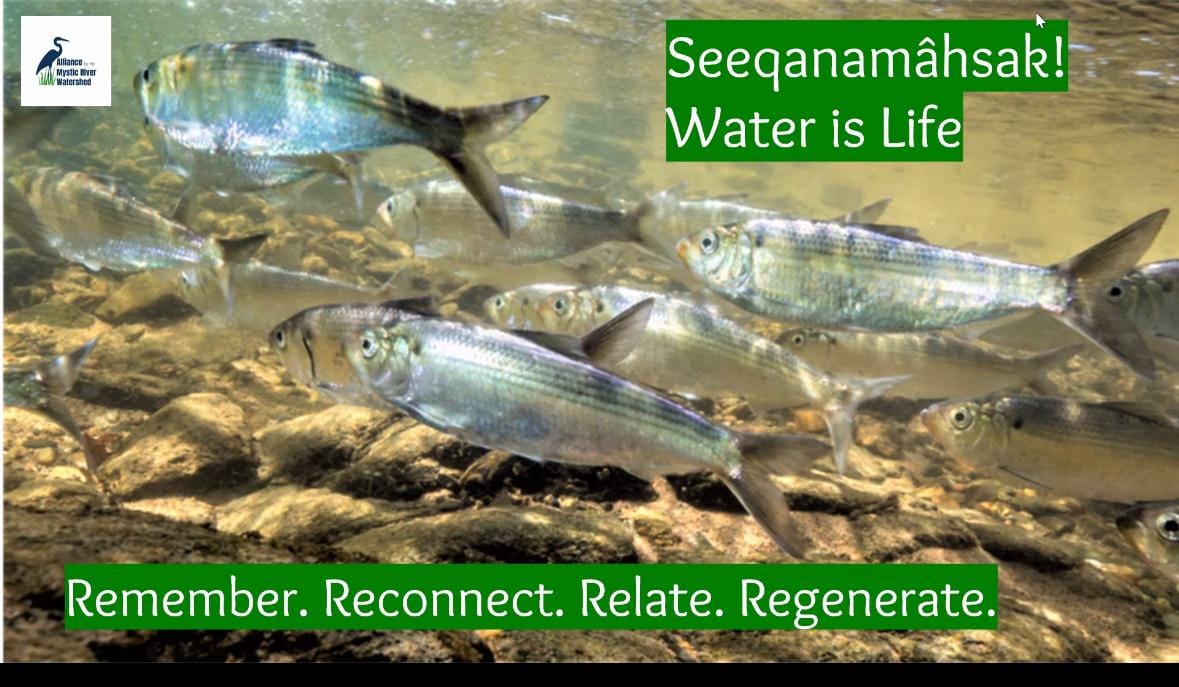
Rather than trying to cover many aspects I want to focus upon a single moment. Seeqanamâhsak means the herring or “Spring fish” in their language. As Rashad Young beautifully described, the Seeqanamâhsak game is played with the children. It is a card game is similar to a game that I knew as a child. Cards would be laid out, face down. Each player turns two up. In the version we played – known as the memory game or “Pelmanism” – the game was to find two similar cards. This game appeared in Britain in the 1910s–20s, and linked to the Pelman Institute’s “Pelmanism” courses.
In the Seeqanamâhsak game, however, it is not a memory game, but a game of relationships. The players select two cards, and when they are turned up, they have to share the connection between the two beings represented. So it might be Rock and River, the Seeqanamâhsak and the Osprey, the Soil and the Worm. If the player can express a connection, they keep the cards. If not, they return them to the pile. This game, with its circular cards, teaches the children the words in their language, their culture, and the relations between things.
As our friend Vee noted during the talk – this is a game of looking for relationships. A discovery game that can be endlessly expanded. Games themselves are as much about relationships as they are about play. And ”recreation” is also re/creation.
In this way, the Nation teaches its language to the children. In this way, the children learn the original names. In this way, they learn the original relationships between the Rock Nation, the Osprey Nation, the Seeqanamâhsak Nation. They enter the water of the culture, and in recreation they re/create the world.
+++
As a teacher, teaching ecology with a BioRegional lens, this recreation-re/creation speaks to me deeply. It was a very personal “ahah”! moment, and I am deeply grateful to Rashad Young for sharing about the Seeqanamâhsak game. This story illustrates how a teaching, a learning, can reach down deeply within. And that it can be shared powerfully between the peoples, between teachers, between Nations. We are all, in education re/creating the world – and at this time nothing could be more important.
Dr. Pete Jeffs is a cultural ecologist in Devizes, UK, working across the life sciences, design and the healing arts towards restoration, regeneration and alignment with living systems and the wisdom of the more-than-human world. He hosts the West European Atlantic Coastal Bioregion Hub in the Design School for Regenerating Earth, and recently authored and illustrated the e-book Birds of Spirit, honoring the bird nations. Learn more by visiting his website Root to Reef.