A refuge for nature, beauty and food sovereignty in Palestine
Prof. Mazin Qumsiyeh is the director of the Palestinian Institute for Biodiversity and Sustainability at the University of Bethlehem, lifting up the beauty of Palestine's natural and cultural heritage, preserving knowledge and land connection as non-violent resistance.
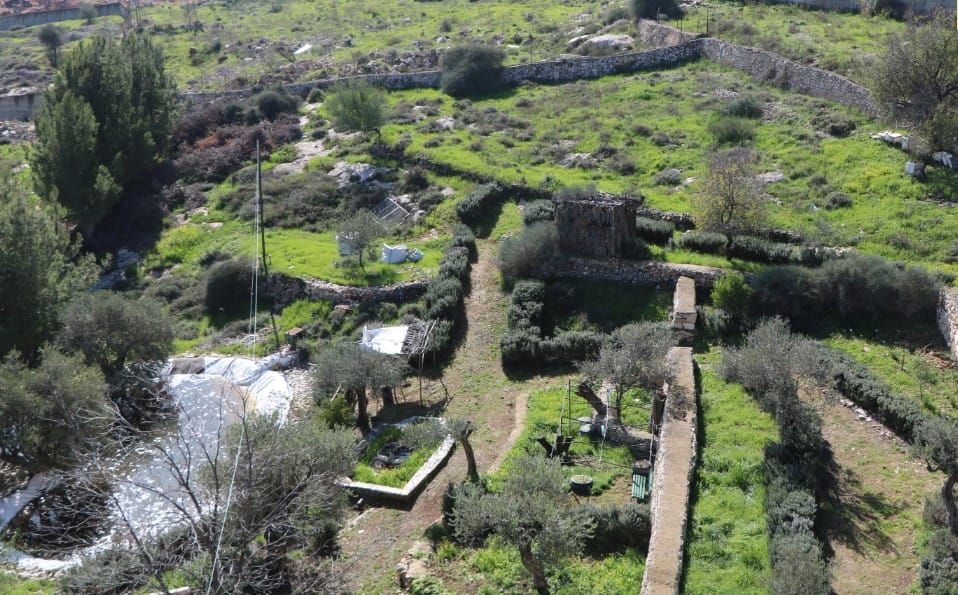
We are so very happy to have started holding heartfelt StoryWeaving dialogues in the past two months with Professor Mazin Qumsiyeh, founder and director of the Palestine Institute for Biodiversity and Sustainability at Bethlehem University in Palestine, and also meeting team members and volunteers in our conversations.
Through these conversations we have been touched and inspired by the natural beauty and heritage of Palestine, and by Prof. Mazin's dedication to creating a refuge for people, permaculture and animals – and at the same time a vital repository for heirloom seeds and traditional farming knowledge – in the face of brutal military occupation and genocide. "In Palestine, environmental degradation is not incidental—it is intentional, protracted, and aimed at breaking the eco-sumud (ecological steadfastness) of the Palestinian people," Mazin wrote in the Ecologist.
A long held dream is now all but completed. Palestine's first Natural History Museum. Most of the funding has been raised and the buildings completed on land donated by the university. Now in the final fundraising phases, they are especially looking for volunteers to help conceive the permanent exhibitions. Mazin also shared with us the beautiful idea of a duo of healing spiritual gardens, one at the Museum and the other at the Bethlehem Mental Health Institute.
This video gives you a tour of the Natural History Museum project:
In our first conversation with Prof. Mazin, in April, we were also joined by Morag Gamble, founder of the Permaculture Education Institute in Queensland, Australia. She will be interviewing Prof. Mazin for the upcoming Festival of Wild and Kind Ideas, 20-25 May, that she hosts. It's free with an amazing lineup of speakers, Sign up here.
Prof. Mazin described the beauty of Palestine's natural and cultural heritage and the resistance inherent in preserving knowledge and land connection. For us, this evoked the resilience of the land and nature as an inspiration to resilience of the heart, strengthened by the more-than-human life energy guiding us and supporting us through every collapse, every crisis, every war and disaster. Not resilience in the sense of coping with even more adversity and injustice, but rather understanding resilience as the ground from which our health, strength, joy and love of life find expression (more soon on this, with our friends from the Pocket Project).
The Institute's botanical garden hosts some 420 species of local wild plants, many of them endangered, including rare orchid species. The permaculture program offers a resource for local farmers, helping them stay connected to an ancient Fertile Crescent lineage of minimal intervention farming knowledge, while also hosting volunteers from around the world. People from 47 different countries have come to volunteer at the Institute, he said, with all these activities sustaining both local resilience and global shared struggle, both of which are necessary. Times are very hard. Bethlehem received some 3 million global visitors annually before the genocide, and now receives virtually none.
You can view our conversation here on YouTube in two parts:
Part 2:
"To me, traditional knowledge is the most important knowledge," Mazin said. Traditional knowledge has been augmented with science, and with the introduction of more intensive technologies like hydroponics and aquaponics as an adaptation to the loss of land and water access under the occupation.
"We work with farmers to advance this kind of methodology," Mazin said. "We show them the traditional knowledge that existed among their ancestors, combined with a little scientific knowledge that can advance food sovereignty. We aim to have people produce their own foods. The facilities here are a laboratory for people to see things in action and learn from it, taking plants, seeds and ideas... We produce studies to set the stage for action, with community gardens, permaculture, a seed bank, training and building capacity. Ultimately what we are doing is a form of non-violent resistance."
To learn more, explore the amazing natural and cultural resources of the Institute and donate, visit www.palestinenature.org