The Earth doesn’t need us to save it. It needs us to remember it. La Tierra no necesita que la salves. Necesita que la recuerdes.
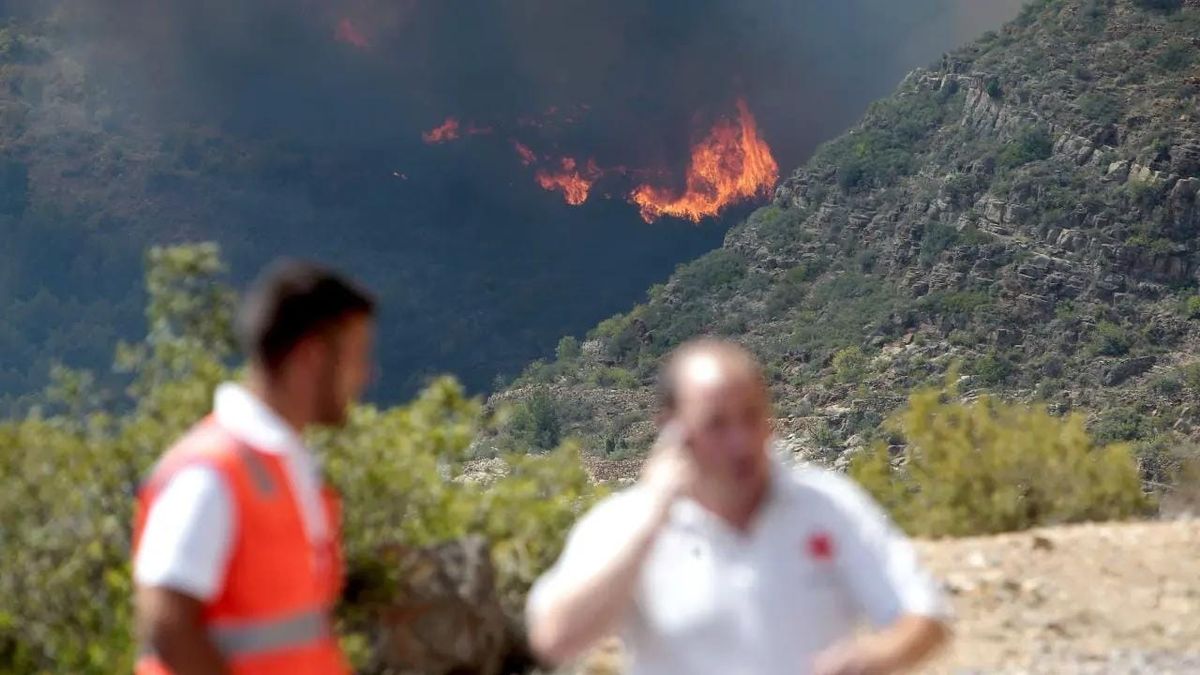
By our dear collaborator Salvadore Perez based in Albal, Valencia Spain.
Orginal Spanish and English translation. Gracias Salva!
Es difícil y doloroso observar cómo los montes de la península ibérica arden. Una más de las mal llamadas catástrofes naturales que nos muestran, una vez más, que el modo de vida que llevamos como sociedad no es sostenible en su mayor parte.
Es difícil y doloroso volver a escuchar los mismos discursos de todos los espectros ideológicos y sociales, cada uno el suyo. La necesidad de cuidar el monte, limpiarlo, la falta de medios, la prevención... todas ciertas, pero insuficientes. Insuficientes porque, una vez más, la mirada lineal de causa-efecto nos distrae de lo que en realidad nos está ocurriendo.
Cuando el monte arde, lo que arde de verdad es nuestra propia vida. Tenemos la costumbre de mirar el monte como un objeto ajeno, separado de nosotros, con el que apenas mantenemos relación —sobre todo quienes vivimos en ciudades, aunque a la hora de opinar nos sintamos con toda la sabiduría del mundo—. Pero esa separación es una ilusión. No hay un "nosotros" aquí y una "naturaleza" allí ardiendo: el agua que bebemos, el aire que respiramos, la tierra que pisamos son el mismo tejido del que estamos hechos. El monte no es un paisaje que contemplamos desde fuera; es cuerpo nuestro. Cuando arde, no arde algo que nos pertenece: arde algo que somos.
Lo mismo nos ha ocurrido con la DANA del 29: las soluciones y opiniones llegan de fuera del territorio que sufre la afección directa, como si lo ocurrido allí no nos concerniera del todo, cuando en realidad estos fenómenos nos afectan a todos, de un modo u otro, nos toque directamente o no.
Volvemos a un conjunto de agentes que se culpan entre ellos, cada uno sosteniendo en alto su bandera particular mientras denuesta al resto, quedando en ocasiones el fuego mismo en segundo plano. Porque ya es demasiado tarde, porque ya está ardiendo, y porque la virulencia de los incendios actuales es tal que los sistemas de extinción no están preparados para hacerles frente.
Una vez más, problemas del siglo XXI que intentamos resolver con herramientas del siglo XX y un modelo de gobernanza que se demuestra, una vez más, inservible.
Propongo que cambiemos el punto desde el cual observamos los incendios, las inundaciones, las olas de calor: todos estos desastres que han dejado de ser fenómenos naturales cíclicos, parte de la vida misma, para convertirse en procesos de violencia extrema, causantes de destrucción y muerte por la influencia de la mano del hombre —procesos antropogénicos, término cada vez más presente en las narrativas, y necesario—. Pero conviene no quedarnos ahí: llamarlos "antropogénicos" puede seguir sugiriendo que el hombre actúa sobre algo externo a él. Quizás el paso siguiente sea entender que no hay un afuera. El monte que arde no es una víctima que el hombre ataca desde fuera: somos monte, somos agua, somos aire ardiendo. Comprenderlo así no diluye la responsabilidad; la hace, si cabe, más urgente.
No hablo de soluciones, porque no las tengo. Hablo de procesos, de mirarnos a nosotros mismos, de ser conscientes en cada momento de nuestra vida de cómo cada cosa que hacemos afecta a la vida, a toda la vida, no solo la humana. Porque vamos todas en el mismo barco, un barco que se llama Tierra y que es nuestra casa. La de todas y todos.
Dejemos ya de exportar las responsabilidades y asumamos nuestro rol en ellas, y para hacerlo tomemos consciencia de la necesidad de modificar el lugar desde el que abordamos nuestra relación con la naturaleza. Dejemos de mirar solo con la mente, con la mera razón, y abrámonos a otra forma de conocimiento, de sabiduría. Asumamos desde ya, lo comprendamos o no, que el conjunto cuerpo-mente trabajando al unísono es la puerta a otro tipo de inteligencia, la necesaria para abordar estos problemas. Problemas del siglo XXI.
Al final, nuestra mente construye un escenario que cada una de nosotras cree cierto, que toma por realidad, pero la mayoría de las veces esa no es la realidad. Conscientes de ello, empecemos a creer en escenarios diferentes: regeneradores, defensores de la vida, construidos alrededor del respeto y la sabiduría del amor. Hagamos la prueba. Con nuestra mirada actual no encontramos el camino. Dejemos que ese cuerpo-mente se sienta a sí mismo y actúe desde ahí.
Desde ese espacio de calma nos daremos cuenta de que esa relación con la naturaleza —espero que me entiendas— no existe. Los elementos se relacionan cuando son externos entre sí, pero nosotros no somos externos a la naturaleza. Somos naturaleza.
Desde ese mismo espacio, empecemos a construir un nuevo escenario en el que los incendios, las inundaciones y otros fenómenos dejen de ser compañeros de la destrucción y la muerte, y recuperen su carácter de procesos regeneradores.
La Tierra no necesita que la salves. Necesita que la recuerdes.
*********************English version:
The Earth doesn’t need us to save it. It needs us to remember it.
It is difficult and painful to watch the forests of the Iberian Peninsula burn. This is yet another of the misnamed “natural disasters” that show us, once again, that the way of life we lead as a society is, for the most part, unsustainable.
It is difficult and painful to hear the same old rhetoric from across the ideological and social spectrum, each with its own take. The need to care for the forests, to clear them, the lack of resources, prevention… all true, but insufficient. Insufficient because, once again, the linear cause-and-effect perspective distracts us from what is actually happening to us.
When the forest burns, what is truly burning is our own life. We’re accustomed to viewing the forest as something foreign, separate from us, with which we have barely any connection—especially those of us who live in cities, even though when it comes to voicing our opinions we feel we possess all the wisdom in the world. But that separation is an illusion. There isn’t a “us” here and a “nature” there that’s burning: the water we drink, the air we breathe, the earth we walk on are the very fabric of which we are made. The forest isn’t a landscape we contemplate from the outside; it is our very body. When it burns, it isn’t something that belongs to us that’s burning—it’s something that we are.
The same thing happened to us with the cold air mass on October 29: solutions and opinions come from outside the area directly affected, as if what happened there didn’t concern us at all, when in reality these phenomena affect us all, in one way or another, whether we’re directly impacted or not.
Once again, we see a group of actors blaming one another, each waving their own banner while denigrating the rest, with the fire itself sometimes taking a back seat. Because it’s already too late, because it’s already burning, and because the intensity of today’s fires is such that firefighting systems are not equipped to handle them.
Once again, we’re trying to solve 21st-century problems with 20th-century tools and a model of governance that is proving, yet again, to be useless.
I propose that we shift the perspective from which we view fires, floods, and heat waves—all these disasters that have ceased to be cyclical natural phenomena, part of life itself, and have instead become processes of extreme violence, causing destruction and death due to human influence—anthropogenic processes, a term that is increasingly present in narratives and is necessary. But we shouldn’t stop there: calling them “anthropogenic” may still suggest that humans act upon something external to themselves. Perhaps the next step is to understand that there is no “outside.” The burning forest is not a victim that humans attack from the outside: we are the forest, we are water, we are burning air. Understanding it this way does not diminish our responsibility; if anything, it makes it even more urgent.
I’m not talking about solutions, because I don’t have any. I’m talking about processes, about looking at ourselves, about being mindful in every moment of our lives of how everything we do affects life—all life, not just human life. Because we’re all in the same boat, a boat called Earth that is our home. Everyone’s home.
Let’s stop shifting the blame and take ownership of our role in these issues, and to do so, let’s become aware of the need to change the perspective from which we approach our relationship with nature. Let’s stop looking at things solely through the mind, through mere reason, and open ourselves to another form of knowledge, of wisdom. Let’s accept from now on—whether we understand it or not—that the body-mind as a whole, working in unison, is the gateway to another kind of intelligence, the one needed to tackle these problems. The problems of the 21st century.
In the end, our minds construct a scenario that each of us believes to be true—one we take as reality—but most of the time, that is not reality. Aware of this, let’s start believing in different scenarios: regenerative ones, ones that defend life, built around respect and the wisdom of love. Let’s put it to the test. With our current perspective, we cannot find the way. Let’s allow that body-mind to feel itself and act from that place.
From that space of calm, we’ll realize that this relationship with nature—I hope you understand what I mean—doesn’t exist. The elements relate to one another when they are external to each other, but we are not external to nature. We are nature.
From that same space, let’s begin to build a new reality in which fires, floods, and other phenomena cease to be companions of destruction and death, and regain their nature as regenerative processes.
The Earth doesn’t need you to save it. It needs you to remember it.