r3.O Conference + Confluence Weaves and Dispatches - Eli Ingraham on Bioregional Knowledge Commoning, poetry and solidarity
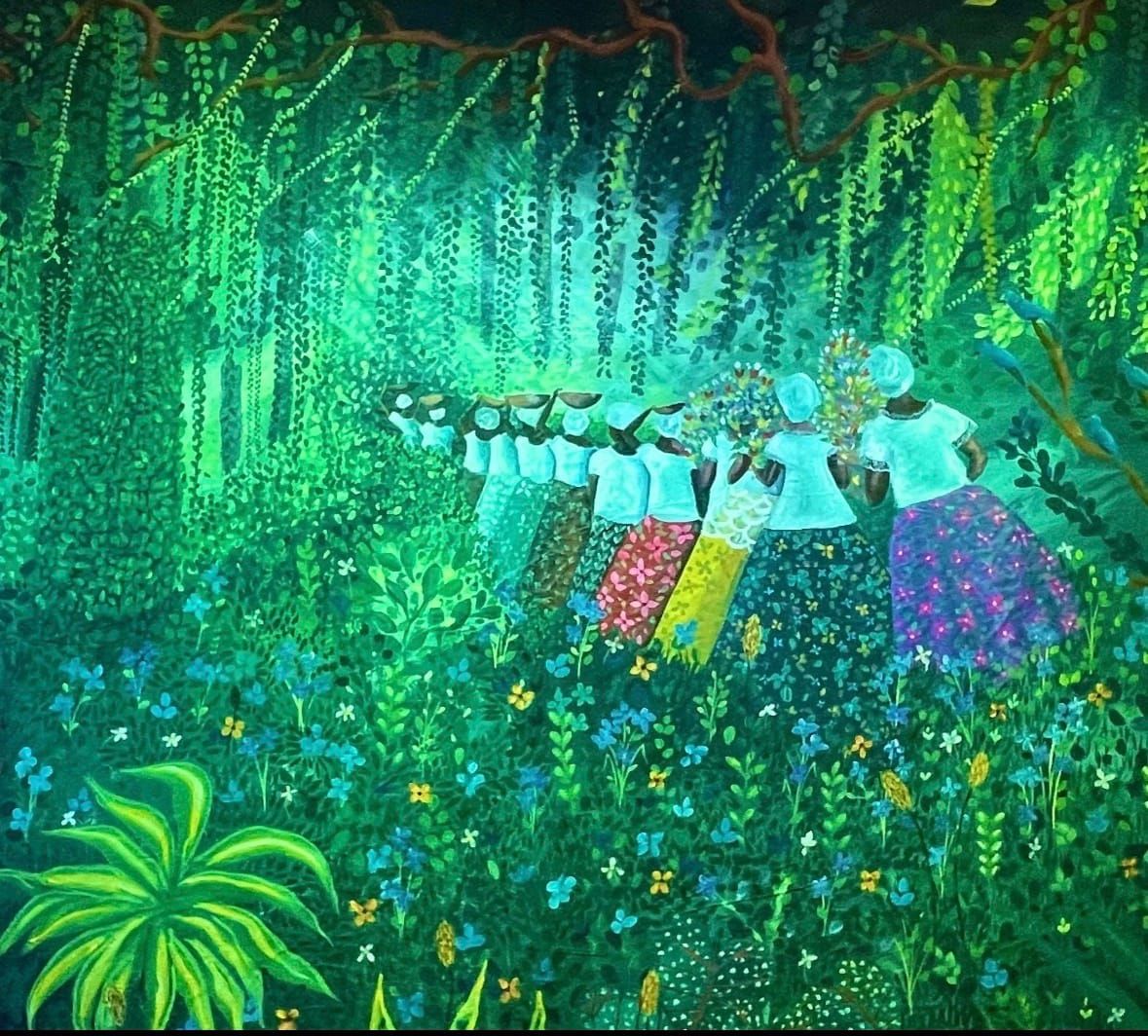
Emmanuelle Chiche and special editor
Weavings with r3.0 research fellow and Northeast Woodlands Bioregioning Collective member, Eli Ingraham, former CEO of beloved Riane Eisler’s Center For Partnership Systems.
I think serendipity made us meet Eli during her Narrative Form and Literary Craft of Indigenous Poetics workshop hosted by Cheyenne poet m.s. Red Cherries in Provincetown, Cape Cod, where Eli has a home. The group explored expression and art-making informed by Indigenous poets. The workshop inspired our storyweave that day in a delicious and light way; if you keep reading here, you will receive Eli's poem as her offering or best watch it in our video interview here: https://youtu.be/dkFB6OeHiVQ?si=MmA7PpeSSOaBFY49
Eli first described her early corporate life, then her creative time at PBS and NPR before the digital and tech takeover of the world. In a few sentences she took us through her social impact work with African textile workers, micro-finance projects in Rwanda with women post-genocide, East-West Science programs with Tibetan monastics, and digitizing ancient manuscripts with the Dalai Lama’s team of archivists. She then reflected with a beautiful smile and humor on her time working closely with Riane Eisler to pollinate her Partnership Systems theories and build her legacy. We at StoryMoss were lucky to be introduced to Riane through Eli. The Chalice and the Blade, Riane’s stellar book first published in 1987, accompanied Eli on a one-year backpacking journey around Europe in her twenties. Influenced by both Riane’s work and Fritjof Capra’s, The Turning Point, Eli gravitated toward systems theory and systems change as a way of making a difference in the world.
Eli first encountered bioregionalism when the Design School for Regenerating Earth was launched. After learning at the global level, Eli felt compelled to get more involved in her home bioregion and asked to join the Northeast Woodlands Bioregioning Collective led by Bill Baue, co-founder of r3.0. Please take a look at the bioregional work here shared by team member Maggie Favretti: https://www.alliancemrw.org/copy-of-bioregional-regeneration-curr.
Bill and Eli started collaborating with Spanish data scientist Andrea Farias on the Bioregional Knowledge Commoning [BKC] initiative. Eli and Bill co-lead the primary research [bioregional engagement and pattern discernment] with Andrea handling the secondary research [tech build and data science interpretation]. Together, they work closely with their research teams and a council of Indigenous advisors to gather and govern different kinds of bioregional knowledge. Care and consent are core values of the project. Eli will present on their primary research phase during the upcoming r3.O Conference in September. Humility and devotion to the work surfaced as the most important qualities Eli hopes to bring to their bioregional commoning efforts.
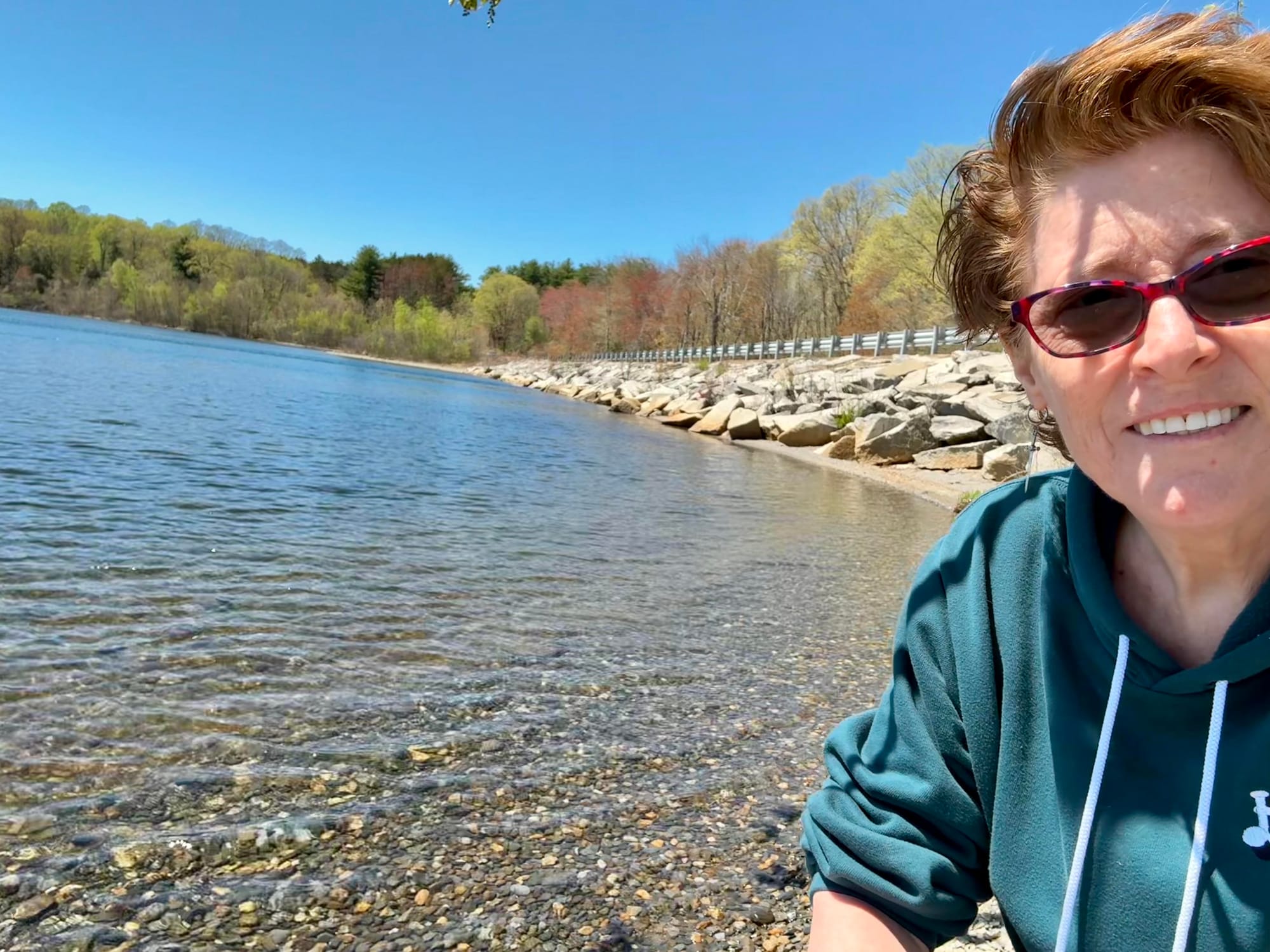
Honoring the source of her water at the Wachussett ("near the mountain" in the Algonquian language) Reservoir, MA (Courtesy Eli Ingraham)
Indigenous communities don’t necessarily need bioregional knowledge commons, they embody it as a way of life. Indigenous peoples around the world hold vast knowledge intertwined with more-than-humans, the Sun, the Moon, the rivers and the birds. Through their traditions, they have protected many kinships and indigenous cosmologies, passing them on through rituals, ceremonies and rites of passages from generation to generation in order to create more good ancestors and strong ancestral land lineage.
Eli’s spirit of inquiry asks: how do we approach somatic, oral, and sacred knowledge? How can we create a consent-based vessel to hold and share this knowledge so that others benefit? Bill Baue loves to quote "the ontological pluriversality" when discussing the nature of their research. Eli shared it with us as: "the recognition that multiple ways of being, knowing, and relating to reality can coexist, without assuming that any single worldview defines reality for everyone." She added that in Bioregional Knowledge Commoning, it also extends to:
- the same word having different meanings in different communities
- two (or more) different words between communities having the same meaning.
What an amazing series of missions and inquiries throughout her life. We rejoiced at feeling that Eli has let her intuitive sense guide her through her life. She is an eternal learner and co-creator, her curiosity, wit, imagination and art seem to provide the life energy she needs and loves to share with her various communities.
We asked Eli to pick an indigenous artist to feature in this article. She joyfully shared Taya Mâ Shere's chant here, called Solidarity: https://www.fromthedeep.earth/solidarity. Please enjoy.
She also graciously accepted our invitation to close our spontaneously recorded conversation that you can watch here (30 minutes): https://youtu.be/dkFB6OeHiVQ?si=MmA7PpeSSOaBFY49 with a beautiful poem she composed at the Indigenous Poetry workshop that week.
The title of Eli's poem is Chest of the Sky and we are honored to share it with you now and thank you dear Eli for trusting our little StoryMoss as a "vessel." Like many bioregional practitioners and social artists, Eli is bringing her poetry into her bioregional work.
Chest of the Sky1,2
We write to begin history / impaling it with the quill / of new skinned memories.
We rechristen the land / with cloying maps that cut / mountains and belonging.
We turn rivers into swords / carving crosses in the wind / blessing the violence.
in the forest hush:
children chant songs of bees
and burl not the gilded
hymns of conquest
trees don’t walk they stand
embodied witnesses against
the chest of the sky
they are the priests of time
watching the shadows of now
while we eat our future
We are cartesian bits / pacing faster than feet tick / asking why the fields are quiet.
We do not see the face of rain / breathing before it speaks / not answering questions.
our return is in kneeling
in walking our wounded dreams
home to the firstborn stories
eli ingraham
provincetown
august 3, 2026
1 Cristine Takuá, Indigenous Brazilian Elder, influenced this poem by her talk, “Cristine Takuá in the Wild Cycle 2019”
2Ailton Krenak, Indigenous Brazilian Elder, used this expression in his talk, “Ailton Krenak, chefe Seattle e Davi Kopenawa”
More and more we notice that poetry some call "biopoetry," as well as indigenous poetry, are being used by bioregional practitioners to close the sacred space of a gathering. It’s as if they intend to send us off to wander in our imagination until the next time we meet here or there. The subtle, fluid, versatile energy of arts, music and bioregional and regenerative storytelling around the campfire is strong and very alive in the bioregional movement, branching out to biocultural and even "biospiritual" (first shared with me by The Great Nordics' bioregional host.) At StoryMoss, we find it fascinating. It makes us want to weave more to get that magic life energy to permeate our being and all those around us humans and not-humans.
Thank you dear Eli for your rich leadership and for your kind introduction to Riane Eisler that we are now lucky to be in conversation with in our growing series on Riane Eisler's Legacy. Gratitude and curiosity come to our mind.
As we conclude, it feels difficult to end our rich impromptu warm conversation. One of our takeaways was Eli’s emphasis on the importance of relationships. Building and rebuilding relationships the way it should have been done in the first place for the common good. Whether we are talking about knowledge commoning, or technology, or storytelling, it is always about relationships.
There are fundamental differences between Western executive bullet points and fast opinion-making, and slower, longer-paused conversations with room to breathe, think, and listen to nature. To hear the messages from our spirits, bringing in our ancestors with deep heart listening to nature’s native storytellers.
We Westerners HAVE TO SLOW DOWN. The Western mindset is asked to learn and re-learn now. It is our invitation to accept, share with many and enjoy together. We are learning to create our meeting and sharing of spaces to bring more inspiration, leaving a seat or more for non-human participants, even to change the practice of interviewing with storytelling practice instead (more welcoming, natural, heartfelt, fluid) in the primary research instead of Western interview cold predictable techniques.
If you want to know more about Eli's primary research in connection with the Bioregional Knowledge Commoning project, please tune in to the r3.O Conference September 8-11, 2026. In addition, Bill Baue will give an extended talk on the BKC at the Turtle Island Bioregional Congress on September 15: https://conference2026.r3-0.org/ and https://www.tibc11.earth/.
Eli also wished to share ms. Red Cherries reading Mother at the 2024 National Book Awards Finalist Reading" https://www.youtube.com/watch?v=9eddBJBxPQU.
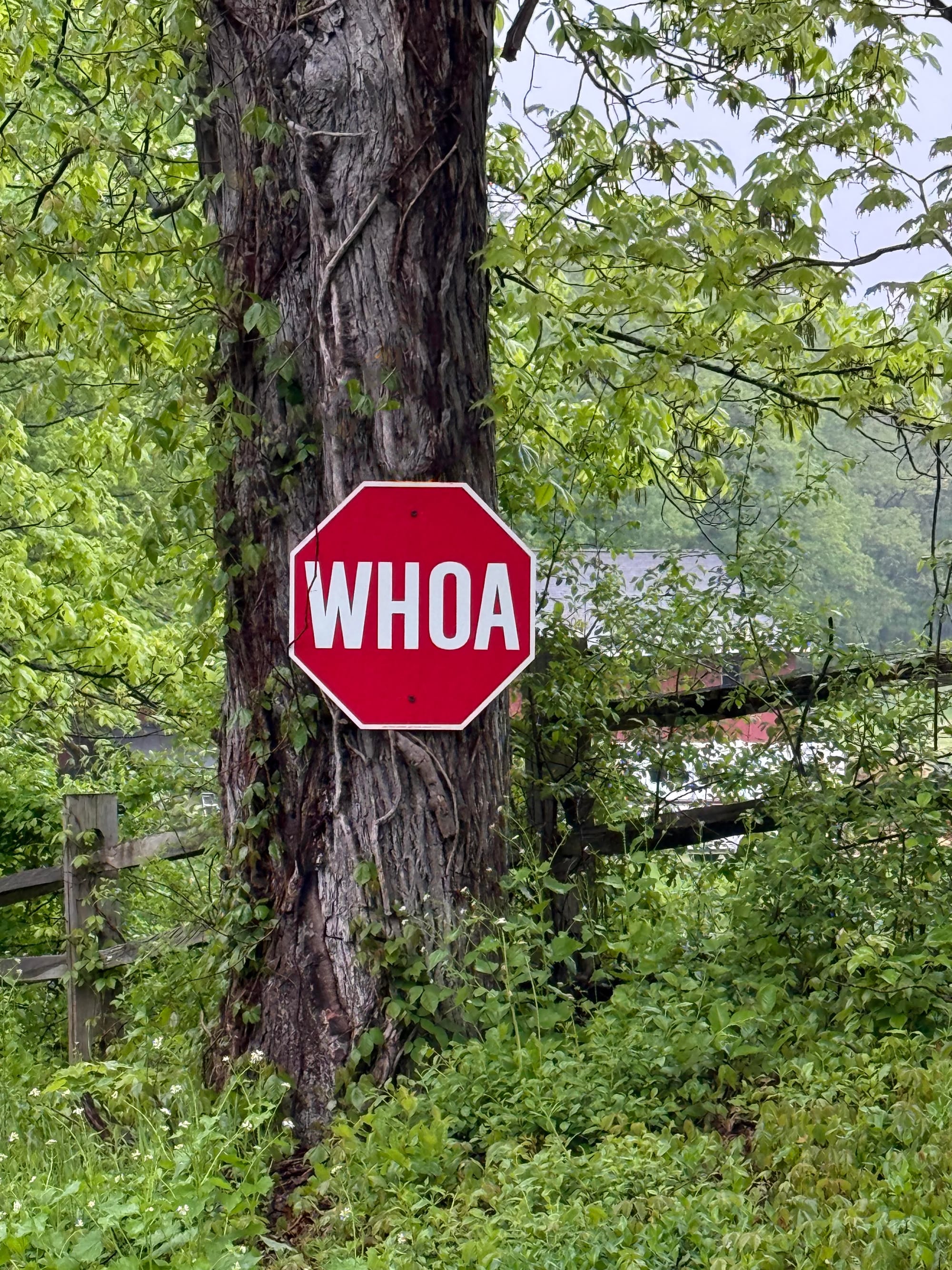
Thank you for your care, dear readers.
Subscribe to StoryMoss